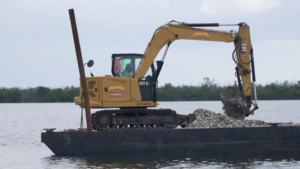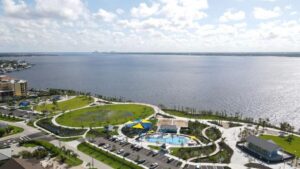
A major ecological comeback is officially taking shape along the northern reaches of the Gulf coast. The highly anticipated Turtle Bay reef restoration project is currently underway within the delicate waters of Charlotte Harbor, marking a definitive step forward in the preservation of Southwest Florida’s marine infrastructure.
Led in part by the Coastal Conservation Association (CCA) Florida, this science-driven habitat initiative relies on an innovative, community-backed weapon: millions of pounds of recycled oyster shells. By strategically deploying these natural materials, biologists are laying the physical foundation required to spark a massive biological rebirth in the bay.
The Biological Powerhouses: Oysters as Natural Water Filters
The primary engine driving the Turtle Bay reef restoration is the humble eastern oyster (Crassostrea virginica). Oysters are widely recognized by marine scientists as a foundational keystone species, acting as nature’s most efficient water purification system.
-
Massive Filtration Capacity: A single mature oyster is capable of filtering approximately 50 gallons of water daily, stripping out harmful excess nutrients, suspended sediments, and microscopic particulate matter.
-
Natural Water Quality Booster: By scaling up the localized oyster population through this targeted restoration, the project establishes a continuous, chemical-free filtration network that directly counters seasonal nutrient overloads.
-
Creating Living Shorelines: As new wild oyster larvae attach themselves to the recycled shell beds, they form a calcified, structural matrix. This living reef acts as a natural wave break, absorbing energy from boat wakes and storms to actively mitigate shoreline erosion.
Reversing Decades of Over-Harvesting and Habitat Depletion
The current intervention in Turtle Bay is a direct response to a century of ecological pressures. Historically, Charlotte Harbor boasted thousands of acres of contiguous oyster bars and lush seagrass meadows. However, decades of intensive commercial harvesting, altered freshwater flows from inland channels, and intense tropical storm cycles have severely depleted these vital assets.
When oyster reefs disappear, the surrounding environment experiences a destructive domino effect. Without the protective structural buffers provided by the reefs, fine sediments easily become suspended in the water column by wind and currents. This turbidity blocks vital sunlight from reaching the seafloor, effectively suffocating and killing off nearby seagrass beds.
The Turtle Bay reef restoration explicitly aims to break this cycle. As the newly installed oyster beds stabilize the seafloor and clarify the water, native shoal grass and turtle grass will finally receive the sunlight required to naturally recolonize the bay.
Key Environmental Milestones
| Restoration Metric | Project Detail & Impact |
| Lead Organization | Coastal Conservation Association (CCA) Florida |
| Primary Material | Recycled oyster shells (sourced from local restaurants) |
| Filtration Output | ~50 Gallons per day per mature oyster |
| Ecosystem Synergy | Supports blue crabs, redfish, snook, and foraging sea turtles |
| Project Sequence | 6th dedicated restoration effort in the Charlotte Harbor basin |
Supporting the Regional Recreational Fishing Economy
Beyond the immediate water quality benefits, the Turtle Bay reef restoration serves as a major financial support mechanism for Southwest Florida’s multi-billion dollar marine tourism and recreational angling industries.
An active, thriving oyster reef is often described as the “marine equivalent of a tropical rainforest.” The intricate nooks, crannies, and interstitial spaces created by the clustered shells provide critical nursery habitat and protective cover for juvenile blue crabs, shrimp, and stone crabs. This explosion of base-level biodiversity acts as an immediate magnet for prized gamefish species including snook, redfish, juvenile tarpon, and spotted seatrout making the restored zones a premier destination for sustainable catch-and-release sports fishing.
Looking Forward: A Continuous Commitment to Charlotte Harbor
Local environmental officials emphasize that habitat restoration is a marathon, not a sprint. The current work in Turtle Bay represents the sixth large-scale restoration effort successfully executed in the immediate region.
With another phase of advanced site installations already budgeted and scheduled for next year, scientists are building a continuous corridor of resilient habitats across Charlotte Harbor. For waterfront homeowners and real estate investors tracking long-term property values near the water, these major infrastructure projects offer strong peace of mind, ensuring that the natural lifestyle assets defining the region are actively protected for generations to come.
Coastal Conservation Note
The success of the Turtle Bay reef restoration relies heavily on partnerships with local Southwest Florida restaurants. Through organized shell-recycling programs, tons of discarded oyster shells are diverted away from local landfills, cured in the sun for months to eliminate pathogens, and safely returned to the water to build new life.