

Categories
Island Update

Identity Theft Protection: 7 Digital Habits That Put You at Risk

Effective identity theft protection is more than just checking your credit score; it requires a fundamental shift in how you navigate the digital world. With reports of fraud jumping to 1.2 million annually since 2023, and Artificial Intelligence making scams increasingly sophisticated, safeguarding your personal data is no longer optional—it is essential.

While sophisticated hackers are a threat, many breaches occur because of simple consumer behaviors that leave digital doors unlocked. By tightening your online routine, you can significantly lower your risk profile. Here are seven common habits that undermine your identity theft protection and how to correct them.

1. The Danger of Reusing Passwords

Using the same password across multiple sites is the digital equivalent of using one key for your house, car, and bank safety deposit box. If a hacker breaches a low-security site (like a loyalty rewards account), they instantly have the key to your banking or mortgage portal.

The Fix: Switch to “passphrases” rather than simple passwords. A strong passphrase is at least 14 characters long and combines a random string of letters, numbers, and symbols. To manage these, utilize a secure password manager and always enable multi-factor authentication (MFA).

2. Ignoring Software Updates

Clicking “Remind Me Later” on software updates is a habit that weakens your digital security. Developers release updates primarily to patch security vulnerabilities. When you ignore them, you leave your device open to exploits that are already known to cybercriminals.

The Fix: Treat updates as urgent digital housekeeping. Enable automatic updates on your mobile devices and computers to ensure you never miss a critical security patch.

3. Oversharing on Social Media

Social media has blurred the line between public and private life, often at the expense of identity theft protection. Sharing your location, birthdate, or family details provides fuel for social engineering attacks. Hackers can use this data to guess security questions or craft convincing phishing emails.

The Fix: Audit your privacy settings and be selective about what you post. Avoid sharing real-time location data or sensitive milestones that could reveal answers to security questions (like your mother’s maiden name or first pet).

4. Trusting Unverified Websites

Sending data over an unencrypted connection is risky. When a website URL begins with “HTTP” rather than “HTTPS,” the data you enter is not encrypted, meaning it can be intercepted by anyone watching the network traffic.

The Fix: Always look for the “HTTPS” prefix and the lock icon in the browser bar before entering payment or personal information. However, stay vigilant—scammers can mimic these signs, so always double-check the URL for spelling errors.

5. Clicking Links from Unknown Senders

Phishing remains a top threat, with nearly half of all social engineering attacks occurring via email. These scams often use urgency—claiming an account is locked or a payment failed—to trick you into clicking malicious links.

The Fix: Pause before you click. If an email demands “immediate action,” view it with suspicion. Instead of clicking the link, navigate directly to the service provider’s official website to verify the claim.

6. Disregarding Breach Notifications

In an era of constant notifications, it is easy to ignore a letter or email stating your data was part of a corporate breach. However, ignoring these warnings is a major lapse in identity theft protection. A breach can lead to significant financial loss and credit damage.

The Fix: Take every breach notice seriously. Change the passwords for affected accounts immediately and monitor your bank statements and credit reports for any unauthorized activity.

7. Over-Relying on Incognito Mode

Many users mistakenly believe that “Incognito Mode” renders them invisible. In reality, while it stops your browser from saving your history locally, it does not hide your activity from your internet service provider, employer, or potential hackers on the network.

The Fix: Understand the limitations of private browsing. For true anonymity and better security on public Wi-Fi, consider using a Virtual Private Network (VPN) rather than relying solely on browser settings.

Conclusion: securing Your Digital Future

The aftermath of identity theft involves more than just financial loss; it brings stress, vulnerability, and hours of recovery time. By recognizing these seven habits and prioritizing identity theft protection, you secure not just your data, but your peace of mind.

Categories
Island Update

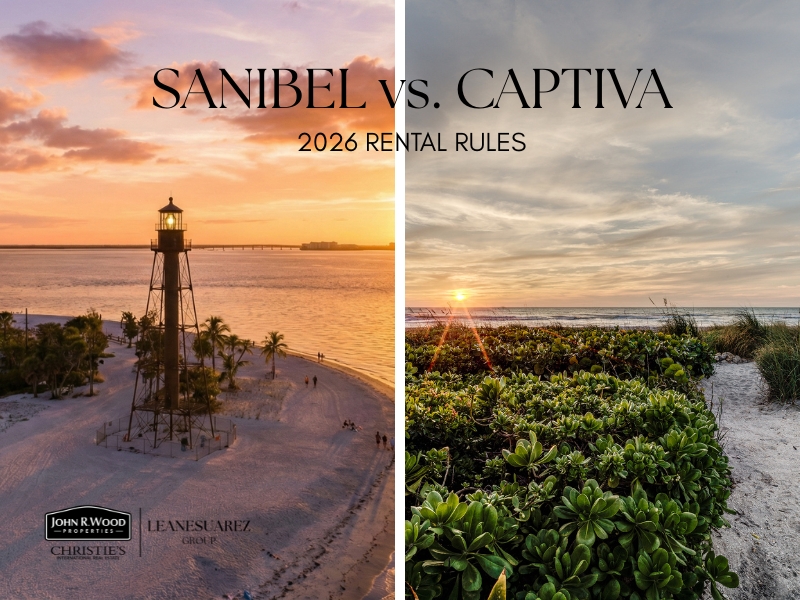
Sanibel vs Captiva Rental Rules & 2026 Market Guide

When analyzing Sanibel vs Captiva rental rules, the primary distinction lies in zoning and lifestyle goals. Sanibel Island generally enforces a strict 28-day minimum for vacation rentals to maintain a residential atmosphere. In contrast, Captiva Island offers flexibility, allowing weekly and even daily rentals in resort zones. As of January 2026, this flexibility continues to drive higher cash-flow potential for Captiva properties, while Sanibel remains the premier choice for privacy and stability.

For investors navigating the post-2025 market recovery, understanding these nuances is critical. Buying on the “wrong” island for your financial goals can mean a difference of tens of thousands of dollars in annual revenue. Whether you are seeking a high-turnover asset or a quiet family retreat, knowing the specific ordinances of Lee County versus the City of Sanibel is your first step.


What are the Sanibel vs Captiva rental rules for 2026?

The rules regarding rental frequency are dictated by the City of Sanibel (incorporated) versus Lee County (which governs Captiva). Below is the 2026 comparison of permitted rental frequencies.

Feature Sanibel Island Captiva Island
Minimum Stay 28 Days (Homes)
*Some condos allow weekly.
Daily & Weekly
*Daily allowed in Resort zones.
Best For Seasonal Residents & Privacy Seekers High-Yield ROI Investors
Permit Cost Higher (Dwelling Rental License) Lower (Tax Registration Only)

The “Grandfather Clause” Exception on Sanibel

While the general rule for Sanibel single-family homes is a 28-day minimum, savvy buyers know there are exceptions. Specific condominium complexes (such as Sundial, Loggerhead Cay, and others) possess “grandfathered” status that allows for weekly rentals. These specific units often command a price premium because they offer the best of both worlds: Sanibel’s nature-focused environment with Captiva-style income potential. If you are looking for this specific asset class, please contact us directly for the verified list of eligible complexes.

How is the Sanibel Real Estate Market performing in Jan 2026?

Sanibel remains a “Lifestyle Market.” Following the complete restoration of the Sanibel Causeway recreation areas in late 2025, buyer confidence has stabilized. The market here is driven less by cap rates and more by “usage value”—how much the owner enjoys the property.

Inventory and Pricing Trends

  • Inventory Levels: Listings have stabilized (approx. 510 active properties), up 9.6% from the previous quarter. This increase gives buyers more options and less pressure to overbid.
  • Days on Market: Properties are averaging ~150 days on market. This longer timeline is normal for a second-home market and indicates a return to pre-2020 normality.
  • The “Sanctuary” Premium: Homes backing up to conservation land or the “Ding” Darling Wildlife Refuge are seeing value retention even as the broader market softens.

Who is buying on Sanibel?

In 2026, the buyer demographic has shifted slightly. We are seeing fewer “short-term flippers” and more end-users—families looking for a legacy property to hold for 10+ years. The completion of the 26-mile Shared Use Path has also driven demand from active retirees prioritizing walkability and biking.

Is Captiva Island a better investment for rental income?

For investors seeking maximum ROI (Return on Investment), Captiva is typically the clear winner. The zoning here treats real estate

Categories
Island Update

Art for a Cause: Silent Auction Announced as Legal Battles over South Seas & Rauschenberg Property Intensify

The Captiva Civic Association (CCA) is calling on art lovers and community defenders to gather for an evening of culture and advocacy. On Thursday, February 5, at 5:00 p.m., the CCA will host a silent auction featuring art generously donated by local artists.

Held at the Captiva Civic Center, the event will feature food, drinks, and music. For those unable to attend in person, the auction will also be accessible online. All proceeds will go directly to the Protect Captiva Legal Fund to support the ongoing litigation regarding island development.

Update: The Rauschenberg Property Alongside the event announcement, Protect Captiva issued a significant update regarding the 22-acre Rauschenberg Foundation property. The group believes the Foundation has sold the land to South Seas, rejecting a competing bid from the Captiva Island Fire Control District and a community investor who sought to preserve the land in honor of Bob Rauschenberg’s legacy.

However, development on this land faces hurdles. Lee County has advised South Seas via a Zoning Verification Letter that the property is governed by the Captiva Code and Lee Plan, which limits density to three units per acre. Protect Captiva noted that any attempt to increase this density would require rezoning and amendment approvals—moves that would likely trigger further litigation and community opposition.

“It is difficult to comprehend the extent to which the Rauschenberg Foundation has failed the island community that Bob Rauschenberg loved and personally sought to protect from development,” the organization stated.

The Legal Landscape: A Multi-Front Battle Protect Captiva provided updates on five other legal fronts:

  • The 912-Unit Limit Appeal: South Seas and Lee County have appealed the Circuit Court decision (Judge Shenko) that limited the resort to 912 units. Briefs have been filed, and parties are awaiting the assignment of judges. Currently, no building permits for condos or hotels can be issued without notice to the CCA.

  • Rezoning Challenge: A coalition including the CCA, RLR Investments, Royal Shell, and multiple condo/timeshare associations has filed a Petition for Writ of Certiorari to invalidate the County’s rezoning decision. The case has been assigned to Judge Shenko, with an initial status conference scheduled for March 9, 2026.

  • DOAH Appeal: The CCA and the City of Sanibel have appealed the Administrative Law Judge’s ruling regarding the Land Development Code amendments. If the court reverses the decision, recent County actions regarding South Seas could be called into question.

  • Motion for Sanctions: The CCA is awaiting a review of its motion for attorney fees against South Seas for what it terms a “frivolous lawsuit” regarding the interpretation of the 912-unit cap.

  • New Lawsuit Against Community Panel: On Dec. 23, 2025, South Seas sued the Captiva Community Panel over a public records dispute, despite the Panel producing over 1,000 pages of documents. Protect Captiva views this as a strategy to “run up legal bills” for community organizations opposing density increases.

How to Help The community is encouraged to attend the auction on Feb. 5 or contribute directly to the Legal Fund. Tax-deductible contributions can be made online.

Categories
Island Update

Engineering Study Begins for Sanibel Fishing Pier: A Community-Led Path Forward

A beloved piece of Sanibel’s history is taking its first concrete steps toward recovery. The City of Sanibel announced it will utilize $24,000 in citizen donations to fund an engineering study, a critical move to determine if temporary repairs can be made to the Sanibel Fishing Pier.

Closed since suffering extensive damage during Hurricane Ian, the pier has remained an “eyesore” and a reminder of the storm’s toll. However, a new partnership between the City and determined residents aims to restore access.

Sanibel Fishing Pier

The Financial Challenge Because the pier was not insured, the full cost of repair or replacement falls on the City and other funding sources.

  • Repair Estimate: $651,190

  • Full Replacement Estimate: $1,232,966

  • FEMA Support: While the City sought reimbursement, FEMA has indicated it is prepared to obligate only $145,000—a figure significantly lower than even the estimated demolition cost.

Acknowledging that investment in the pier was initially a lower priority due to widespread infrastructure damage, City Manager Dana Souza noted, “It’s going to take a long time to get the funds to do the work.”

A Phased Approach to Reopening To accelerate the timeline, City staff and residents—led by fundraising organizers Robert Stern and Richard Birney—have developed a two-phase plan. The City Council has authorized moving forward with Option 1, which allows residents to raise private funds for the design and construction.

  • Phase 1 (Top-Side Repairs): Estimated at $200,000. This phase focuses on necessary top-side repairs and access improvements to get the pier open to the public sooner. Permitting is expected to take six months or less.

  • Phase 2 (Permanent Repairs): Estimated at $451,190. This involves in-water work, including pile installation. Permitting could take up to a year.

Funding the Fix The financial roadmap relies on a mix of public and private support:

  • City Contribution: The City is prepared to provide $233,000 toward the pier’s future (roughly equivalent to the cost of demolition).

  • Citizen Fundraising Target: The community goal is to raise approximately $600,000 to cover the remaining costs for both phases.

The Charitable Foundation of the Islands (CFI) will handle the collection and disbursement of funds, which will be held at Bank of the Islands. A dedicated citizens committee will lead the fundraising charge.

Next Steps With the $24,000 in hand for the design phase, an engineer will now prepare the specifications for the repairs. Once the design is complete and sufficient private funds are raised, the City will issue an Invitation to Bid for construction.

As the Citizens’ Committee noted in their presentation, “The Sanibel Pier is a key part of our island legacy.” This project aims to transform a symbol of loss back into a vibrant service for islanders and visitors alike.

Categories
Island Update

Speed Study Update: Preliminary Data Reveals Traffic Patterns on San-Cap Road

The City of Sanibel is taking a closer look at how fast drivers are really traveling on our island’s busiest thoroughfares. In a city-funded initiative, the City Council is reviewing data from a comprehensive Roadway Speed Study performed by Johnson Engineering with support from city staff.

The goal of the study is to analyze existing conditions—including city-wide speed limit signage and passing zones—to determine if current speed limits need adjustment in select locations.

How the Data Was Collected To get an accurate picture of traffic behavior, the study utilized a 24-hour monitoring period over 20 consecutive days (from November 19, 2025, to December 9, 2025). Sensors collected data at six specific locations: four along Sanibel-Captiva Road, one on East Periwinkle Way, and one on Rabbit Road.

Preliminary Highlights: What the Numbers Say The draft report offers a fascinating glimpse into driver behavior. While the majority of drivers appear to be adhering to general flow, there are notable outliers, particularly on Sanibel-Captiva Road.

  • Sanibel-Captiva Road (East of Pine Ave):

    • Most drivers (37,908) maintained speeds of 30-35 mph.

    • However, 21 vehicles were clocked driving over 60 mph.

  • Sanibel-Captiva Road (West of Buckthorn Lane):

    • The bulk of traffic (43,036) traveled at 40-45 mph.

    • Concern lies in the higher speeds: 1,924 cars were recorded going over 55 mph, with 20 of those exceeding 70 mph.

  • Sanibel-Captiva Road (East of Gulf Pines):

    • The majority (61,519) traveled at 35-40 mph.

    • 39 cars were recorded driving over 70 mph.

  • Sanibel-Captiva Road (East of Rabbit Road):

    • Most traffic (66,252) stayed within the 35-40 mph range.

    • 351 cars were clocked over 60 mph, with 59 exceeding 70 mph.

  • East Periwinkle Way & Rabbit Road:

    • Speeds were generally lower here. On East Periwinkle, most drivers stayed between 30-35 mph, while Rabbit Road saw the majority at 35-40 mph.

    • Extreme speeding was less frequent but still present, with roughly 18-29 cars exceeding 50 mph at these locations.

What’s Next? A full draft report from city staff and Johnson Engineering will be forthcoming soon. In addition to speed limits, the final report will also address the safety and placement of passing lanes along Sanibel-Captiva Road.

Categories
Island Update

Council Decision: East Periwinkle Bridge Design to Proceed Without Major Height Increase

The future of the East Periwinkle Way Bridge has been decided. Following months of study and community debate regarding the bridge’s dimensions, the Sanibel City Council voted unanimously on January 13 to proceed with the current engineering design “as is,” foregoing proposals to significantly raise the bridge’s height.

Background: A Necessity Born from Ian The bridge approaches were famously washed out during Hurricane Ian, cutting off access to the east end of the island for months. While repairs were made to restore access, the State of Florida has declared the current structure “functionally obsolete,” necessitating a resilient long-term replacement.

East Periwinkle Bridge Design

The “Sweet Spot” Design In June 2024, the City hired consultants TYLin to design a replacement that would improve resilience, pedestrian access, and boat navigation. By February 2025, the consultants presented a design that balanced these needs with the constraints of the nearby intersections (Pen Shell Drive, Limpet Drive, and Tulip Lane).

The approved design features:

  • Vertical Clearance: A one-foot increase in clearance for boat traffic.

  • Speed Limit: A reduction to 25 mph on the bridge (with a potential extension of this speed limit along East Periwinkle Way) to accommodate the slope.

  • Pedestrian Access: Widening the shared-use path from 8 feet to 10 feet, achieved by slightly narrowing the vehicle travel lanes.

The Debate Over Height During the planning phase, some residents advocated for a more significant increase in vertical clearance to better accommodate boat traffic. Consequently, the Council directed staff to obtain cost estimates for raising the bridge by two to three feet.

The Final Verdict At the recent January 13 meeting, TYLin reported that increasing the bridge height beyond the proposed one foot would face significant hurdles:

  • Cost: It would add an estimated $4 million to the project.

  • Engineering: The currently proposed one-foot increase already utilizes the maximum available road slope.

Faced with these constraints, the City Council voted unanimously to move forward with the design as currently proposed to avoid further delays.

Categories
Island Update

Council Recap: Recovery Extensions, Solar Updates, and Property Decisions

The Sanibel City Council recently conducted a flurry of public hearings, addressing everything from hurricane recovery measures to renewable energy codes. Here is a breakdown of the key decisions made.

Extending Hurricane Recovery Tools To continue supporting the island’s rebuilding efforts, the Council unanimously approved several extensions for temporary permitting allowances. These provisions, which were originally set to expire at the end of 2025, have now been extended through December 31, 2026.

  • Expediting Waiver Reviews: The temporary allowance for “short-form” administrative approval of waivers has been extended.

  • Conditional Uses: The allowance for short-form approval of certain conditional uses was also extended. Note: Notice is still provided to neighbors within 300 feet, and any resident can request that an application undergo a full “long-form” review by the Planning Commission.

  • Waiving Long-Form Development Permits: While variances and most conditional uses must still go before the Planning Commission, the subsequent implementing development permits can now be approved by planning staff for another year. This streamlines the process while ensuring all standards of review still apply.

Solar & Renewable Energy Updates Moving to its second reading, the Council is finalizing an ordinance to support renewable energy adoption.

  • Easier Installs: The amendments make it easier to install solar batteries and associated equipment.

  • Simplified Process: Permitting is simplified through an administrative deviation process.

  • Clarity: The revisions provide clearer definitions to accommodate evolving technology.

Property Compliance: 4560 Waters Edge The Council voted unanimously to levy an assessment of $25,954.96 against the property at 4560 Waters Edge. This action recovers the costs the City incurred to demolish the dangerous structure after the owner failed to abate code violations or pay the demolition bill.

Sanibel Harbours Dredging The Council held a required hearing to formalize the Sanibel Harbours Inlet Dredging Assessment District.

  • The Plan: A recurring annual special assessment of $586.23 will be levied on the 44 parcels within the district.

  • The Goal: Residents requested this district to pay for future dredging via their annual tax bills rather than facing large lump-sum payments when dredging becomes necessary.

Police Pension Adjustment A review of the Municipal Police Officers’ Retirement Trust Fund revealed that a 3.0% contribution for supplemental medical benefits is voluntary, not mandatory. Consequently, twelve sworn officers who stated they would not have opted into this contribution will be issued refunds. The mandatory 5.0% pension contribution remains unchanged.

Categories
Island Update

CHR to Transform Former Fish House into Affordable Housing Complex

Community Housing & Resources (CHR) made a landmark announcement at the January 13 Sanibel City Council meeting, revealing plans to purchase the former Fish House property located at 1523 Periwinkle Way.

CHR Executive Director Nicole Decker-McHale outlined an ambitious redevelopment plan that will transform the vacant site into a vibrant, mixed-use community asset.

The Project: By the Numbers The proposed $21 million project aims to revitalize the Periwinkle Way location with a scheduled completion date of July 2028. The development plans include:

  • 38 Affordable Housing Apartments: A significant boost to the island’s housing inventory.

  • Commercial Space: 2,500 square feet designated for commercial use, creating a true mixed-use environment.

Reaching City Goals This development is historically significant for Sanibel. Once completed, the additional units will allow the city to finally reach its long-standing affordable housing population goal of 3 percent for the first time. The City Council voted unanimously to provide a formal letter of support for the project.

Grant Requirements & Eligibility While the project is a major win for the island, Decker-McHale noted an important stipulation regarding resident eligibility. Under the specific terms of the grant awarded to fund this development, CHR is required to open the application process to all Lee County residents, considering them alongside applicants from Sanibel and Captiva.

Upcoming Event: “Full Moon” Fundraiser

In addition to the development news, the City Council also approved a request for CHR’s upcoming fundraising event.

Mark your calendars for February 2, when CHR will host a “Full Moon” Fundraiser featuring a beach campfire at the Sundial Beach Resort. It promises to be a magical evening supporting the organization’s vital mission on the island.

Categories
Island Update

Santiva Islanders Calendar: January Until 28

The Santiva Islanders have announced their upcoming schedule of activities, featuring fitness classes, social gatherings, and nature walks. The group welcomes all adult islanders and visitors, regardless of age.

Wednesday, January 21

  • 9:30 a.m. – 10:30 a.m. | Cardio & Strength: Hosted by Mahnaz Bassiri at Sanibel Congregational United Church of Christ (2050 Periwinkle Way). Bring water/towel; light weights optional.

  • 11:00 a.m. – Noon | Cardio & Strength: Second session at Sanibel Congregational United Church of Christ.

  • Noon – 1:00 p.m. | Leisure Lunch: Meet at Thistle Lodge at Casa Ybel Resort (2255 W. Gulf Drive). Attendees order individually. RSVP to Erika Arnowitz at 239-472-4775, ext. 107.

  • 4:00 p.m. – 6:00 p.m. | Social Hour: Casual gathering at American Legion Post 123 (4249 Sanibel-Captiva Road). Attendees order individually.

Thursday, January 22

  • 9:00 a.m. – 10:00 a.m. | Breakfast Club: Meet at Jerry’s Cafe (1700 Periwinkle Way). Attendees order individually. Contact: Bernard Arroyo at 239-295-5463.

  • 1:00 p.m. – 3:30 p.m. | Social Bridge: Held at Saint Michael and All Angels Episcopal Church (2304 Periwinkle Way). Cost: $5. Contact: Bryant Korn at bryantekorn@gmail.com.

  • 1:00 p.m. – 3:30 p.m. | Social Mahjong: Held at Santiva Islanders Place (SIP) (2330 Palm Ridge Road, Suite 17). Cost: $5. Contact: sanidona@gmail.com.

Friday, January 23

  • 9:30 a.m. – 10:30 a.m. | Cardio & Strength: Hosted by Mahnaz Bassiri at Sanibel Congregational United Church of Christ.

  • 11:00 a.m. – Noon | Cardio & Strength: Second session at Sanibel Congregational United Church of Christ.

Monday, January 26

  • 9:30 a.m. – 10:30 a.m. | Cardio & Strength: Hosted by Mahnaz Bassiri at Sanibel Congregational United Church of Christ.

  • 11:00 a.m. – Noon | Cardio & Strength: Second session at Sanibel Congregational United Church of Christ.

  • 11:00 a.m. – 1:00 p.m. | Brown Bag Lunch: Bring your own lunch to Santiva Islanders Place (SIP) (2330 Palm Ridge Road, Suite 17).

Tuesday, January 27

  • 10:00 a.m. – 11:00 a.m. | Walking Group: Explore the SCCF’s Shipley and Pond Apple trails. Meet at the SCCF’s Bailey Homestead Preserve (1300 Periwinkle Way) in the front parking lot. Lunch at a local restaurant follows (optional).

  • 1:00 p.m. – 3:00 p.m. | Euchre: Held at Santiva Islanders Place (SIP). Cost: $5. Contact: Les Carlson at lescarlson@comcast.net.

Wednesday, January 28

  • 9:30 a.m. – 10:30 a.m. | Cardio & Strength: Hosted by Mahnaz Bassiri at Sanibel Congregational United Church of Christ.

  • 11:00 a.m. – Noon | Cardio & Strength: Second session at Sanibel Congregational United Church of Christ.

  • 4:00 p.m. – 6:00 p.m. | Social Hour: Casual gathering at American Legion Post 123.

Membership & Class Costs

  • Annual Membership: $25

  • Cardio & Strength Cost: Members: $5/class or $60/month | Non-members: $10/class or $120/month.

For more information, visit santivaislanders.org or email santivaislanders@gmail.com.

Categories
Island Update

Update from the Panel: Rauschenberg Sale Pending, Fire Referendum, and 2026 Officers

The Captiva Community Panel (CCP) convened on January 13 for a packed meeting, addressing the future of the Rauschenberg property, upcoming fire district elections, and infrastructure resilience.

Rauschenberg Property: A Contract is Signed The future of the iconic 22-acre Rauschenberg Foundation property appears to be taking a definitive direction. CCP President David Mintz reported that while no official confirmation has been released by the foundation, a contract has been signed.

Mintz clarified that the contract is not with the Captiva Island Fire Control District nor the community investor group that sought to preserve a portion of the land. Instead, strong evidence points to South Seas as the buyer. Mintz noted that attorneys for the resort recently requested information from Lee County regarding zoning and the Captiva Plan specifically for those 22 acres.

Fire District Referendum: February 10 Despite the developments with the Rauschenberg land, Captiva Fire Chief Jeff Pawul emphasized the critical nature of the upcoming special election on February 10.

Voters will decide on a referendum allowing the district to issue bonds—not to exceed $24 million—to purchase and improve property for public safety purposes. Chief Pawul clarified that while the original hope was to acquire part of the Rauschenberg site, the district’s needs remain urgent regardless of that specific parcel.

Current critical needs include:

  • A new emergency helicopter landing zone.

  • Additional staff housing and apparatus storage.

  • A post-disaster staging area.

  • A dock for public safety vessels.

“All of the things we need have not changed,” Pawul said, noting that potential development on the Rauschenberg site would only increase the island’s population and safety requirements. If passed, the tax increase aims to stay at or below 1 mill, and funds would only be spent after a transparent public process to identify suitable land.

Infrastructure & Resiliency Panel Member Mike Bennett provided updates on key county infrastructure projects:

  • Jensen’s Curve/Santiva: The county is currently selecting a consultant to plan and model resiliency improvements for this area.

  • Blind Pass Bridge: Officials are exploring possible repairs and additional fortification for the bridge.

2026 Officer Election The panel unanimously elected its officers for the 2026 term:

  • President: David Mintz

  • Vice President: Bruce McDonald

  • Secretary: Jay Brown

  • Treasurer: Sandy Stilwell Youngquist

LCSO Safety Reminders Sgt. Rich Zeltman of the Lee County Sheriff’s Office reminded residents and visitors that golf carts are prohibited on dunes and beaches. This follows a recent report of a violation. “It is against the law,” Zeltman stated. He also reported that the Captiva crew responded to approximately 4,000 calls for service last year, ranging from water rescues to traffic enforcement.