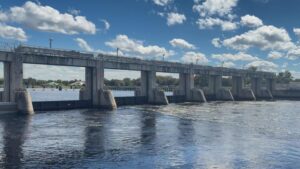
The Caloosahatchee River lock closures confirmed by the U.S. Army Corps of Engineers are set to trigger significant operational challenges across Southwest Florida’s marine industry, shutting down critical transit points along the Okeechobee Waterway during the peak of the winter boating season. Beginning January 4, 2027, federal maintenance operations will halt vessel passage through two primary inland navigation structures connecting Lake Okeechobee to the coastal waters of the Gulf.
Under the phased maintenance schedule, the W.P. Franklin Lock in eastern Lee County (Olga) will close completely to all vessel traffic from January 4 through March 1, 2027. Once work concludes at Franklin Lock, crews will transition upriver to shut down the Ortona Lock in Hendry County, with closures extending through April 2027. While federal authorities emphasize that dewatering and structural repairs are vital to prevent catastrophic mechanical failures, regional marina operators, commercial towing fleets, and seasonal cruisers warn that the timing will deal a sharp blow to tourism revenues during the busiest months of the year.
Comprehensive Maintenance Scope for Franklin and Ortona Locks
The upcoming Caloosahatchee River lock closures represent mandatory lifecycle rehabilitation work overseen by the U.S. Army Corps of Engineers Jacksonville District. Both facilities serve dual roles: facilitating recreational and commercial vessel navigation and regulating upstream water levels and freshwater releases from Lake Okeechobee into the Caloosahatchee estuary.
During the consecutive shutdown periods, specialized federal engineering teams will carry out intensive structural overhauls:
-
Chamber Dewatering: Placing temporary stop logs and pumping millions of gallons of water out of the lock chambers to create dry working conditions for physical inspections.
-
Gate Refurbishment: Sandblasting, inspecting, and applying anti-corrosive coatings to the heavy steel miter gates and sector gates that endure continuous freshwater and brackish immersion.
-
Valve and Hydraulic Overhauls: Rebuilding underwater fill and discharge culvert valves, replacing worn bushings, and servicing hydraulic operating machinery to ensure reliable opening and closing cycles.
-
Structural and Foundation Inspections: Conducting non-destructive ultrasonic and diving assessments of concrete lock walls, sill structures, and subterranean anchoring systems.
According to federal project managers, executing these comprehensive overhauls is non-negotiable. Without scheduled preventative dewatering, unexpected mechanical failures during high-flow emergency flood control operations could result in months of unplanned emergency closures.
Economic Ripple Effects Across the Okeechobee Waterway
Despite the acknowledged engineering necessity, the timing of the Caloosahatchee River lock closures has drawn sharp criticism from the marine hospitality sector. The Okeechobee Waterway (OWW) serves as the primary cross-state navigable passage in Florida, allowing boaters, long-distance “Great Loopers,” and seasonal cruising yachts to travel directly between the Atlantic Intracoastal Waterway at Stuart and the Caloosahatchee River into Fort Myers and the Gulf.
Because the winter window from January through April coincides with the peak influx of northern cruising vessels navigating south to escape freezing weather, closing the locks effectively severs cross-state inland navigation:
-
Fuel Dock and Marina Revenues: Marinas, fuel docks, and repair yards situated along the Caloosahatchee in LaBelle, Alva, and Fort Myers rely heavily on transient slip rentals and high-volume fuel sales from boaters crossing the state.
-
Vessel Towing and Marine Services: Marine assistance providers and mobile mechanics face disrupted service zones, unable to move transport vessels past the closed control structures to assist stranded clients.
-
Forced Offshore Detours: Cruising boaters wishing to transit between Florida coasts will be forced to undertake the significantly longer, exposed open-water passage around the Florida Keys and through the treacherous shallows of Florida Bay.
Navigating Boater Expectations and Long-Term Waterway Health
The Okeechobee Waterway remains an essential economic artery supporting marine tourism, charter captains, and waterfront businesses across Lee, Hendry, and Glades counties. Coordinating infrastructure preservation while minimizing disruptions to seasonal commerce continues to present a complex balancing act for federal and state water managers.
This operational shutdown joins other major marine conservation and waterfront restoration initiatives underway across regional estuaries. To see how other coastal projects are protecting navigation and shoreline habitats, explore our report on the Naples beach outfall project bonds.
Boaters planning cross-state itineraries for the winter season are urged to monitor official Notices to Navigation Interests (NTNIs) issued through the U.S. Army Corps Navigation Portal.