Categories
Island Update

Founders Scholarship Fund Impact: $1.3M Raised for Local Education

The Founders Scholarship Fund impact on the Naples community reached a new milestone this April, raising more than $1.3 million during a high-profile biennial fundraising event. Held at the prestigious Club Pelican Bay, the 16th Ed Brennan Memorial Banquet & Golf Tournament brought together over 225 local residents and philanthropists. For the Southwest Florida real estate market, such significant community investment serves as a cornerstone for local stability and neighborhood desirability.

Strengthening the Community Through Local Philanthropy

A robust educational support system is a primary driver for long-term property values in Collier County. The Founders Scholarship Fund impact is felt directly in the local workforce and family demographics, as the organization focuses on empowering graduating students from across the region.

During the April 13-14 event, the funds raised were earmarked for high-achieving students with demonstrated financial need. By providing substantial financial backing, the fund ensures that the next generation of local professionals has the resources to succeed, which in turn fosters a resilient and prosperous residential environment.

Scholarship Award Structure

The program provides a predictable and significant financial path for local students:

  • Total Award: $24,000 per student.

  • Disbursement: $6,000 annual increments over four years.

  • Coverage: Tuition, books, lab fees, housing, and food.

  • Requirements: Maintaining a minimum 3.0 GPA.

The Intersection of Real Estate and Resident Investment

In Naples, the health of local non-profits like the Founders Scholarship Fund is often reflective of the area’s economic vitality. Historically, communities with high levels of charitable engagement see a correlation with sustained luxury market demand. Prospective homeowners frequently seek out neighborhoods where the community actively invests in its youth and future infrastructure.

The event at Club Pelican Bay highlighted this synergy, as between 30 and 40 students from Collier County Public Schools are expected to receive these life-changing awards this spring. This level of support helps retain local talent and bolsters the “community-first” reputation that makes the Naples area a premier destination for relocation.

Long-Term Educational Growth

By securing over $1.3 million, the fund is positioned to expand its reach, offering more opportunities for students to pursue degrees while living and eventually working within the Southwest Florida region. As these students graduate and enter the local economy ranging from healthcare and business to engineering they contribute to the sustained growth that keeps the Naples real estate market among the strongest in the state.

Key Fundraiser Highlights

Detail Information
Amount Raised $1.3 Million+
Venue Club Pelican Bay, Naples
Frequency Biennial (Every 2 Years)
Student Benefit $24,000 Scholarship Package
Focus Region Collier County, Florida
Categories
Island Update

Captiva Fire District Land Search 2026: Resolving the Landing Zone Crisis

The Captiva Fire District Land Search 2026 was triggered by the finalized $45 million sale of the 22-acre Rauschenberg property. While the district has historically used the Rauschenberg lawn as a central landing zone, that permission is only temporary. With the resort’s plans for redevelopment looming, Commissioner Jeff Brown emphasized that the “mandate is clear”: the island must secure a permanent, reliable location for medical evacuations.

Chief Pawul explained that the district has traditionally relied on a three-point landing system to cover the length of the island. However, that infrastructure has nearly collapsed due to redevelopment and private property shifts.

The State of Captiva’s Landing Zones

Location Status Current Reliability
North End (South Seas Golf Course) Lost Redeveloped by the resort; no longer available.
Central Area (Rauschenberg Estate) At Risk Temporary access only; now owned by South Seas.
South End (Osprey Way Drive) Active A vacant residential lot; less reliable for high-frequency use.

Strategic Priorities: Central and South End Focus

A major component of the Captiva Fire District Land Search 2026 is the geography of emergency transport. Chief Pawul noted that it is medically “not ideal” to transport a critical patient from the north end of the island all the way to the south end for a relay—or vice versa. Driving a patient in the opposite direction of the hospital (away from the bridge) can disqualify them from flying if their condition deteriorates during transport.

Exploring Residential Conversions

The commission is now investigating the feasibility of buying a residential lot and having it rezoned as “Station Property.”

  • The Rezoning Path: Lee County staff suggested this as the most straightforward method, similar to how the current fire station was established.

  • Community Education: The district plans to lead an educational campaign for neighbors. Pawul noted that the Osprey site averages only one 10-minute flight per month—less intrusive than the mosquito control helicopters that residents are already accustomed to.

  • The Roof Option: Commissioner Sherrill Sims inquired about adding a landing pad to the station’s roof. However, Pawul reported that the current station is not structurally capable of a retrofit; this would only be an option if the island were building a entirely new station.


Station Capacity and Personnel Updates

Beyond the landing zone, the Captiva Fire District Land Search 2026 includes a search for workforce housing. The current fire station is “maxed out” on space.

  • The Referral Strategy: The district is looking into using referendum funds to buy residential property to house EMS or Lee County Sheriff’s Office personnel.

  • Freeing Up Space: Moving EMS crew out of the main station would provide the District’s own firefighters with the room they need to operate effectively as the team expands.

New Hires and Operations

Despite the land challenges, the district is strengthening its ranks. Chief Pawul reported that nearly 20 candidates underwent testing in March.

  • Employment Offers: Two offers have been extended for an immediate start in May.

  • Contingent Hire: A third offer was made to fill an upcoming vacancy, ensuring the district remains fully staffed for the busy spring and summer months.

  • Incident Report: The district responded to 55 incidents in March, a typical volume for the peak of the seasonal residency.


A Proactive Future for Island Safety

The commission concluded with a unanimous agreement to be “proactive” rather than waiting for opportunities to appear. As the Captiva Fire District Land Search 2026 continues, officials plan to approach South Seas and Lee County to see if a dedicated landing zone can be incorporated into the future Rauschenberg property development.

At the LeAneSUAREZGroup, we know that every second counts in a coastal emergency. A permanent landing zone is not just a piece of infrastructure; it is a vital safeguard for the property values and personal safety of everyone on the island. We will continue to track this search and report on any potential land acquisitions that move before the county.

Categories
Island Update

South Seas Rauschenberg Sale: Foundation Rejects Higher $47.9M Bid

The South Seas Rauschenberg Sale closed on March 31, 2026, for $45 million. However, reports have surfaced that the Rauschenberg Foundation rejected a significantly higher offer of $47.9 million from an anonymous bidder. This higher bidder reportedly intended to work with local conservation groups to preserve the land and honor Rauschenberg’s 40-year effort to protect Captiva from the very resort that now owns it.

James Evans, CEO of the Sanibel-Captiva Conservation Foundation (SCCF), summarized the community’s bewilderment: “Why would any functioning business, even if it’s a nonprofit, take less money than what someone else is offering? Especially when the group that was offering more money was the one that would have the community’s best interest in mind?”

The “Monumental Betrayal” of a Legacy

Robert “Bob” Rauschenberg began assembling these 22 acres in the 1960s specifically as a “buffer” against the rapid development of what was then known as South Seas Plantation. In 1977, he famously told The News-Press that the destruction of mangroves and the strain of overpopulation were happening for “no noble reason.”

Lisa Riordan, president of the Captiva Civic Association (CCA), has labeled the South Seas Rauschenberg Sale a “monumental betrayal” of the artist’s wishes. For an artist who found his “spiritual home” after being greeted by a wall of butterflies and a gopher tortoise, the absorption of his “sacred place” into a commercial resort footprint is seen by many as a tragic irony.


Key Figures & Controversies Surrounding the Transaction

The South Seas Rauschenberg Sale is mired in logistical and legal questions that have the island community on high alert.

1. The Conflict of Interest Question

Public records reveal that the foundation hired land-use attorney Neale Montgomery to perform due diligence on the property. However, Montgomery also worked for the buyer (South Seas) in rewriting the Land Development Codes that would eventually govern the property’s potential for increased density.

2. The Fire District’s “Helicopter Hub”

The Captiva Island Fire Control District attempted to purchase a 9.81-acre bayside portion of the land for $22 million to secure it for emergency medical helicopter takeoffs and landings. While South Seas has not yet banned the district from using the site, Fire Chief Jeff Pawul admits that future arrangements are now a major question mark for island safety.

3. The $1.3 Million Legal Battle

The sale arrives amidst a backdrop of seven active lawsuits regarding South Seas’ efforts to boost resort density from 912 to 1,268 units. The CCA reports it has already spent $1.3 million in legal fees to combat the resort’s expansion plans, which many fear will now extend into the Rauschenberg acreage.


What Happens Next? Zoning and Development

Under current zoning, the 22 acres acquired in the South Seas Rauschenberg Sale are limited to three units per acre, allowing for a maximum of 66 units.

However, given the resort ownership’s recent history of seeking code amendments to increase density and building heights, community members are preparing for a new round of litigation. South Seas President Greg Spencer has stated the resort looks forward to creating a “seamless opportunity for integration,” including:

  • New Luxury Condominiums

  • Hotel Expansion

  • World-Class Amenities

  • Art-Related Programming (intended to honor Rauschenberg’s legacy)


The Sale at a Glance

Detail Information
Sale Price $45 Million
Highest Bid Rejected $47.9 Million (Anonymous/Preservation Focus)
Fire District Bid $22 Million (Bayside only)
Total Acreage 22 Acres (Gulf to Sound)
Current Density Cap 66 Total Units
Categories
Island Update

REVIVE! Trash to Fashion 2026: Sustainable Couture Hits the Runway

REVIVE! Trash to Fashion 2026 is officially returning to the islands, merging high fashion with high-impact conservation. Organized by the “Ding” Darling Wildlife Society‑Friends of the Refuge (DDWS), this celebrated event builds on the massive success of previous “Project Refuge” programs. The goal is simple yet revolutionary: transform recycled and reused materials into runway-ready couture to support habitat restoration and conservation education at the J.N. “Ding” Darling National Wildlife Refuge.

The main event will take place on November 4, 2026, at the Sundial Beach Resort & Spa on Sanibel. By turning waste into art, the refuge aims to inspire the community to rethink the plastic crisis and champion the long-term health of our Gulf coast ecosystems.

Call to Creators: $10,000 in Prizes

Whether you are a professional designer, an art student, or a creative innovator, REVIVE! Trash to Fashion 2026 is looking for your vision. The competition is open to all skill levels, and the stakes are high—more than $10,000 in cash prizes will be awarded to the winning designs.

“This groundbreaking fashion competition takes a chic, bold, revolutionary approach to conservation and the plastic crisis,” says Angeli Chin, DDWS project leader. “It encourages the transformation of recycled materials into couture while inspiring us to rethink waste.”

Important Deadlines:


Event Logistics: Beyond the Runway

The impact of REVIVE! Trash to Fashion 2026 extends far beyond a single night at Sundial. Following the runway show, the couture collection will be featured in curated exhibitions at two prominent locations:

  1. The J.N. “Ding” Darling National Wildlife Refuge: Providing visitors an up-close look at the intersection of art and nature.

  2. Tribby Arts Center at Shell Point: Bringing the message of sustainability to the wider Fort Myers community.

At-A-Glance Schedule

Feature Details
Main Event Date November 4, 2026
Primary Location Sundial Beach Resort & Spa, Sanibel
Total Prize Pool Over $10,000
Beneficiary “Ding” Darling Conservation Education
Project Leader Angeli Chin (239-286-5500)

The Role of Community Sponsorship

For local businesses and organizations, REVIVE! Trash to Fashion 2026 offers high-visibility opportunities to align your brand with environmental stewardship. Sponsorships are currently available and directly support youth education programs and regional habitat health.

At the LeAneSUAREZGroup, we know that the beauty of Sanibel is our greatest asset. Supporting events like REVIVE! ensures that the “Sanctuary Island” lifestyle we cherish continues to thrive.

Categories
Island Update

Protect Captiva Legal Update 2026: The Fight for 912 Units

A primary focus of the Protect Captiva Legal Update 2026 involves the long-standing 912-unit density limit at South Seas Resort. Both Lee County and the resort have appealed a Circuit Court decision that reaffirmed this limit.

April 30: Oral Arguments in Fort Myers

The Sixth District Court of Appeal has scheduled a critical oral argument regarding the county’s appeal.

  • Date: April 30, 2026

  • Time: 9:00 a.m.

  • Location: Lee County Justice Center, Courtroom 4A, Fort Myers.

  • Judges: Mary Alice Nardella, Paetra T. Brownlee, and Roger K. Gannan.

These arguments are typically limited to 20 minutes per side. Crucially, South Seas remains under a notice requirement; the resort cannot receive building permits for hotels or condos without giving the Captiva Civic Association (CCA) sufficient time to file for an injunction to block any development exceeding the historic 912-unit cap.


Seeking to Invalidate Rezoning: The Writ of Certiorari

A massive coalition of 20 petitioners—including the CCA, R.L.R. Investments, Royal Shell Vacations, and 20 separate South Seas condo and timeshare associations—is seeking to quash the county’s recent rezoning of South Seas.

The Protect Captiva Legal Update 2026 notes that these petitioners allege a failure of due process and a lack of “competent substantial evidence” for the rezoning. Key arguments include:

  1. Utility Capacity: No reliable evidence that the FGUA wastewater plant can handle the increased density.

  2. Fire Safety: Concerns that current fire department equipment and staffing cannot manage the taller, more numerous buildings.

  3. Inconsistency: Claims that the rezoning violates the Lee Plan, which requires development to remain in keeping with Captiva’s historic patterns.


The Rauschenberg Property: A “Grievous Betrayal”

The recent sale of 22 acres from the Robert Rauschenberg Foundation to South Seas has been met with significant disappointment from community leaders. The Protect Captiva Legal Update 2026 describes this sale as a rejection of the community’s effort to preserve the land in its undeveloped state.

Current Zoning Restrictions on the 22 Acres:

  • Governing Body: Lee Plan and Captiva Code.

  • Limit: Three units per acre (Residential and Hotel).

  • Development: Any expansion of the resort into this “Village” area would require a full Plan Amendment and rezoning, which the coalition has promised to fight with the same vigor as the current South Seas litigation.


Administrative and Public Records Battles

The litigation landscape extends into administrative hearings and public records disputes:

  • The DOAH Appeal: The CCA and Sanibel are appealing an administrative law judge’s ruling that favored the county’s Land Development Code (LDC) amendments. If this is reversed, it could invalidate the county’s actions regarding South Seas over the past two years.

  • Public Records Lawsuit: South Seas has sued the Captiva Community Panel, claiming a failure to respond to records requests. The panel, which has already produced 1,000+ pages of documents, maintains that it may not even fall under the Public Records Act but has retained counsel to defend the matter.


Litigation Status at a Glance

Case Subject Key Event Date
912-Unit Limit Appeal Oral Arguments (Sixth DCA) April 30, 2026
Rezoning Challenge Status Conference (Judge Shenko) April 6, 2026 (Completed)
DOAH/LDC Appeal Awaiting Judicial Panel Assignment Ongoing
Sanctions vs. South Seas Review of Motion for Fees Ongoing

Protecting the Heritage of Captiva

The LeAne TaylorSUAREZGroup understands that the value of Captiva lies in its history and its environment. As the Protect Captiva Legal Update 2026 demonstrates, the community is standing firm against changes that threaten the delicate balance of the island.

We will continue to watch the April 30 arguments closely. For those interested in viewing the proceedings, they are generally webcast by the court, providing a transparent look at the arguments that will shape our shoreline.

Categories
Real Estate News

Kensington Golf & Country Club Renovation: A New Benchmark for North Naples

The Kensington Golf & Country Club renovation has officially concluded, marking a significant upgrade to one of the most prestigious 380-acre private enclaves in North Naples. This multiphase project was designed to address the evolving lifestyle demands of current and future members, specifically focusing on the intersection of social engagement and high-end court sports. For those monitoring the North Naples real estate market, these improvements represent a substantial investment in community value and long-term desirability.

Enhanced Recreation: The New Court Sports Center

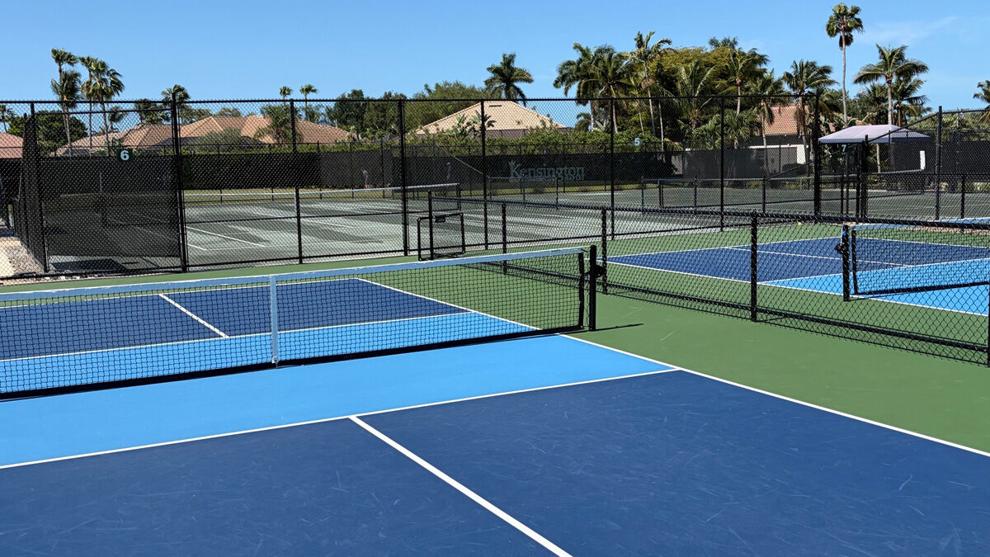
A primary focus of the Kensington Golf & Country Club renovation was the expansion of the club’s athletic footprint. With the rapid rise in popularity of “racquet and paddle” sports across the Gulf coast, the addition of the new Court Sports Center serves as a major draw for active residents.

The club has specifically targeted the surging demand for pickleball, increasing its capacity by 50%. This development aligns with national trends reported by USA Pickleball, highlighting the sport’s role in driving community engagement in luxury residential settings.

Updated Sports Amenities Table

Amenity Type Current Capacity/Detail
Pickleball Courts 6 Total (2 New Additions)
Tennis Courts 7 Har-Tru Courts
Bocce Courts 2 Courts
Clubhouse Square Footage 38,000 Sq. Ft. (Redesigned)

Clubhouse Modernization and Social Infrastructure

Beyond the courts, the Kensington Golf & Country Club renovation involved a comprehensive redesign of the 38,000-square-foot clubhouse. The project prioritized “resort-style” living, featuring expanded dining areas and a modernized pool deck. These social hubs are essential for maintaining the competitive edge of private clubs in the Southwest Florida region.

The clubhouse upgrades follow earlier strategic improvements to the fitness center and the championship golf course. By modernizing these communal spaces, the club effectively future-proofs its infrastructure against shifting market preferences that now favor holistic wellness and diverse social offerings over traditional golf-only models.

Real Estate Implications for North Naples

From a market perspective, the completion of the Kensington Golf & Country Club renovation reinforces North Naples as a premier destination for luxury buyers. High-quality, updated amenities are often cited by Naples Area Board of REALTORS® (NABOR) as key drivers for property appreciation within gated communities.

Key takeaways for the local market include:

  • Sustained Demand: Modernized facilities attract a younger, more active demographic of buyers moving to the Gulf region.

  • Property Value Support: Significant capital improvements by the club often correlate with higher resale values for homes within the 380-acre perimeter.

  • Lifestyle Differentiation: The specialized Court Sports Center distinguishes the property from other area clubs that may still be in the planning stages of their own renovations.

For residents and prospective buyers, this renovation is a clear indicator of the club’s commitment to excellence and its role as a cornerstone of the North Naples community.

Official Project Summary

“This multiphase renovation positions the club to meet growing member demand for recreation and social spaces, ensuring that Kensington remains a top-tier choice for those seeking the ultimate Southwest Florida lifestyle.”

Categories
Island Update

Jaycee Park Reopening Cape Coral: A Modern Waterfront Transformation

The Jaycee Park Reopening Cape Coral on April 30 marks a significant milestone for the Southeast Cape Coral infrastructure and real estate landscape. Following an extensive $18.7 million renovation, the waterfront destination at 4215 SE 20th Place has been wholly reimagined to address aging facilities and enhance community connectivity. A formal ribbon-cutting ceremony is scheduled for May 8 at 10 a.m., inviting the public to experience what is now one of the most technologically advanced recreational spaces in Southwest Florida.

Modern Amenities and Property Value Impact

For real estate professionals and local homeowners, the Jaycee Park Reopening Cape Coral serves as a vital case study in how municipal investment can revitalize a neighborhood’s “Lifestyle Factor.” Traditionally a quiet green space, the park now features a lighted riverfront boardwalk and overlook along the Caloosahatchee River, replacing invasive species with lush native landscaping.

The transformation includes several high-demand amenities that cater to the region’s growing family demographic:

  • Inclusive Recreation: A 5,000-square-foot splash pad and a state-of-the-art playground featuring 40 inclusive elements and protective shade sails.

  • Connectivity: Upgraded pathways equipped with integrated cooling misters to enhance pedestrian comfort during peak summer months.

  • Community Hubs: A new bandshell for live performances, beach volleyball courts, and social gaming areas for cornhole and shuffleboard.

Market Outlook for Southeast Cape Coral

The timing of the Jaycee Park Reopening Cape Coral aligns with a broader push for infrastructure resiliency in the region. As the City of Cape Coral continues to invest in “destination” parks, these projects often correlate with stabilized property demand in adjacent residential zones. Modern homebuyers increasingly prioritize walkability and access to high-quality public space—features that this $18.7 million rebuild delivers in abundance.

Furthermore, a dedicated food truck court is currently in development, featuring six truck pads and a 1,100-square-foot permanent building. This addition is expected to turn the park into a consistent driver of local foot traffic, benefiting nearby small businesses and enhancing the overall economic vitality of the area.

Accessibility and Future-Proofing

A key focus of the renovation was the modernization of the park’s accessibility. The redesigned parking area improves traffic flow and safety, while ADA-compliant features and adult changing stations ensure the facility is accessible to all residents. By addressing the challenges of aging infrastructure, the city has created a future-proof asset that aligns with current Florida building standards.

For residents monitoring local development, this reopening represents more than just a park update; it is an indicator of the city’s commitment to maintaining Cape Coral’s reputation as a premier waterfront community.

Project Fast Facts

Feature Detail
Total Project Cost $18.7 Million
Reopening Date April 30, 2026
Ribbon-Cutting May 8, 2026 (10 a.m.)
Splash Pad Size 5,000 Square Feet
Key Attraction Lighted Riverfront Boardwalk
Categories
Island Update

EAA Reservoir Project Timeline: Federal Officials Announce 5-Year Acceleration

The EAA Reservoir project timeline has been officially accelerated, moving the projected completion date from 2034 to 2029. Federal officials and the U.S. Army Corps of Engineers announced the update on April 13, marking a significant victory for regional water management and environmental restoration efforts. This five-year gain is attributed to a combination of increased state and federal funding, alongside Florida’s strategic takeover of critical infrastructure components.

Understanding the EAA Reservoir Project Timeline Shift

The centerpiece of the Everglades Agricultural Area (EAA) restoration, this project is a massive undertaking designed to store and treat water before it moves south. The accelerated EAA Reservoir project timeline includes the simultaneous development of a 10,500-acre reservoir and 6,500 acres of engineered wetlands.

Once operational, the facility will utilize a high-capacity pump station to redirect and clean water from Lake Okeechobee. This system is designed to mimic natural flow patterns, ensuring that treated water reaches the southern Everglades rather than being discharged east and west.

Environmental and Real Estate Impact of the EAA Reservoir Project Timeline

For the Southwest Florida real estate market, the health of the Gulf and its local estuaries is a primary driver of property value and economic stability. The acceleration of this project is expected to yield immediate benefits for the Caloosahatchee and St. Lucie estuaries:

  • Reduction in Damaging Discharges: The broader restoration effort is projected to reduce harmful releases to the Caloosahatchee by up to 80%.

  • Water Quality Stabilization: By filtering nutrients through engineered wetlands, the project helps mitigate the risk of algae blooms in the Gulf.

  • Local Economic Protection: Improved water clarity and marine health support the tourism and fishing industries, which are foundational to coastal property demand.

According to the South Florida Water Management District, this infrastructure is the “heart” of the Comprehensive Everglades Restoration Plan (CERP), making the expedited delivery a critical milestone for long-term regional resilience.

Key Components of the 2029 Completion Goal

To meet the new EAA Reservoir project timeline, construction is moving forward on several integrated systems:

  1. The Reservoir: A 10,500-acre storage basin designed to hold excess water.

  2. Stormwater Treatment Areas (STAs): 6,500 acres of man-made wetlands that act as natural filters.

  3. Conveyance Systems: Enhanced canals and pump stations to move water south efficiently.

The shift to a 2029 completion highlights a unified commitment to protecting the state’s natural resources. For residents and investors, this infrastructure update provides greater certainty regarding the future health of local waterways and the overall sustainability of the Florida landscape.

Project Overview Table

Feature Details
Original Completion Date 2034
New Completion Date 2029
Reservoir Size 10,500 Acres
Wetland Filter Size 6,500 Acres
Primary Goal 80% reduction in Caloosahatchee discharges

By fast-tracking the EAA Reservoir project timeline, officials are prioritizing the ecological health of the Gulf and the economic longevity of Southwest Florida’s waterfront communities.

Categories
SWFL Update

East Terry St. Project: A $17.8M Investment in Bonita Springs Infrastructure

The East Terry St. Project has officially reached a major milestone as the Bonita Springs City Council approved a $17.8 million contract to begin construction. This long-anticipated infrastructure initiative is designed to revitalize the corridor from Old 41 Road east to Bonita Grande Drive. By prioritizing stormwater resiliency and modern multimodal transit, the city aims to bolster both environmental protection and the long-term desirability of the surrounding residential neighborhoods.

Enhancing Connectivity through the East Terry St. Project

A core objective of the East Terry St. Project is the expansion of multimodal transit options. The plan includes the construction of a dedicated 10-foot multi-use pathway along the south side of the street and new sidewalks on the north side. These improvements will significantly enhance the “Walk Score” of adjacent communities, providing safer routes for pedestrians and cyclists.

Key features of the updated transit corridor include:

  • Roundabout Installation: A new roundabout is proposed at the intersection of Morton Avenue to improve traffic flow and reduce rear-end collisions.

  • Bridge Improvements: The East Terry Street bridge over I-75 will see its paved shoulders reduced to accommodate a protected, separated multi-use path for non-vehicular traffic.

  • Enhanced Safety: New lighting, landscaping, and aesthetic railings will be integrated to improve visibility and the overall neighborhood aesthetic.

Stormwater Resiliency and Environmental Protection

For property owners, the most significant impact of the East Terry St. Project is the advancement of local flood mitigation. Following the severe flooding events of recent years, this project introduces advanced stormwater structures and piped ditches to move water more efficiently toward Leitner Creek and other regional discharge points.

The project’s environmental scope includes:

  • Flood Relief: Targeting isolated areas that experience frequent roadway overtopping.

  • Drainage Conveyance: Installing a new stormwater route on the south side of the street to bypass historical “choke points” at I-75.

  • Paved Ditch Systems: Preserving and enhancing dual ditch capacities through specialized retaining walls.

Project Funding and Development Timeline

This infrastructure overhaul is made possible through a $16.8 million grant from the U.S. Housing and Urban Development (HUD) Community Development Block Grant — Mitigation funds. These funds were secured via FloridaCommerce and the Florida Department of Transportation (FDOT).

Project Metric Specification
Total Contract Value $17,800,000
Primary Contractor Quality Enterprises USA Inc.
Construction Duration 593 Days (from notice to proceed)
Geographic Scope Old 41 Road to Bonita Grande Drive
Federal Funding Source HUD CDBG-MIT

The development is expected to take approximately 19 months to complete once construction begins. For residents and real estate professionals, the East Terry St. Project represents a proactive step in future-proofing Bonita Springs, ensuring the city remains a resilient and accessible destination for years to come.

Categories
SWFL Update

FGCU Health Sciences Building Expansion: A Southwest Florida Growth Engine

The FGCU Health Sciences Building expansion officially broke ground this week, signaling a transformative era for regional infrastructure and the local economy. This $117 million project, titled Marieb Hall South, is set to become the largest structure on the Florida Gulf Coast University campus. Spanning more than 158,000 square feet, the facility is designed to meet the rising demand for skilled medical professionals in Southwest Florida.

Economic Impact of the FGCU Health Sciences Building Expansion

For the local real estate market and business community, the FGCU Health Sciences Building expansion serves as a vital economic catalyst. University data reveals that nearly half of the graduates from the Marieb College of Health and Human Services remain in Southwest Florida post-graduation. These alumni currently contribute an estimated $600 million annually to the regional economy.

The expansion will directly support the talent needs of major healthcare providers and organizations, such as Lee Health and Arthrex. By strengthening the pipeline of “job-ready” professionals, the university enhances the region’s appeal to families and healthcare-focused businesses, which traditionally bolsters long-term property demand in nearby communities like Estero and Fort Myers.

Advanced Technology in the FGCU Health Sciences Building Expansion

The four-story, high-tech building will consolidate various educational programs, including nursing, physical therapy, and physician assistant studies. A cornerstone of the FGCU Health Sciences Building expansion is its state-of-the-art interprofessional simulation center. This space will leverage emerging technologies to future-proof the workforce, featuring:

  • Artificial Intelligence (AI): Integrated into clinical training and research.

  • Holographic Teleportation: Facilitating innovative remote medical consultation.

  • Telemedicine Suites: Preparing students for the modern shift toward virtual patient care.

Development of these cutting-edge instructional tools was accelerated by a $22 million gift from the Elaine Nicpon Marieb Charitable Foundation, the largest in university history.

Future Growth and Regional Workforce Needs

As enrollment in health sciences at Florida Gulf Coast University has doubled over the last decade, this expansion is essential for campus sustainability. While the current focus is on completing Marieb Hall South by mid-2029, university leadership continues to evaluate the potential for a future medical school. Although any potential medical program would be a separate initiative, this expansion significantly increases the capacity for high-level clinical research and academic innovation.

Strategically located between the Arts Complex and Parking Garage 2, this project reflects the continued evolution of Southwest Florida into a premier destination for healthcare education and professional excellence.

Project Quick Facts

Feature Detail
Total Square Footage 158,000+ sq. ft.
Phase 1 Funding $117 Million
Estimated Completion Mid-2029
Location FGCU South Campus, Fort Myers, FL

For those monitoring regional development, the FGCU Health Sciences Building expansion is a clear indicator of the robust institutional investment driving the local market forward.