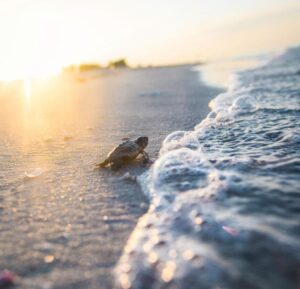
Summer on the islands brings beautiful weather, vibrant community initiatives, and one of nature’s most incredible annual spectacles. The Captiva Erosion Prevention District (CEPD) has issued a public reminder that the island’s pristine beaches serve as vital nesting habitats from May 1 through October 31.
At the LeAneSuarezGroup, we believe that living in harmony with our local environment is what makes Southwest Florida real estate so deeply special. During this critical window, small actions taken by residents, visitors, and beachgoers can make a life-saving difference for nesting mothers and vulnerable hatchlings.
“By keeping our beaches dark, flat and free of obstacles at night, the community can play an important role in supporting one of Captiva’s most important natural resources throughout nesting season.” — The Captiva Erosion Prevention District
Lee County Rules & Legal Requirements
To ensure a safe environment for sea turtles, Lee County enforces strict environmental ordinances throughout the duration of the nesting season. Key requirements include:
-
Shield Beachfront Lighting: Artificial light easily disorients sea turtles, drawing them away from the ocean. All beachfront lighting must be completely invisible from the beach at night. Property owners are legally required to shield outdoor fixtures, utilize amber-colored LED lights or 25-watt yellow bug lights, and draw all blinds or curtains after dark.
-
Clear Beach Furniture Daily: All personal furniture, tents, and recreational equipment must be completely removed from the beach every night between 9:00 PM and 8:00 AM. County ordinances also strictly regulate how commercial furniture may be transported and distributed across the sand.
-
No Vehicles or Fires: Motorized vehicles and open beach bonfires are strictly prohibited on the sand, saving for highly specific, permitted administrative uses.
-
Respect Marked Nests: Never disturb a marked sea turtle nest. County conservation regulations mandate that beachgoers and authorized beach maintenance operations stay at least 10 feet away from all posted nesting perimeters.
                  THE THREE RUNWAYS TO SAFETY: DARK, FLAT, CLEAR

  [ KEEP IT DARK ]    ───► Turn off beachfront lights; close blinds after 9 PM.
  [ KEEP IT FLAT ]    ───► Fill in holes; level sandcastles before leaving.
  [ KEEP IT CLEAR ]   ───► Pull all chairs, tents, and gear off the sand by 9 PM.
Best Practices: How You Can Help Protect Hatchlings
Beyond abiding by strict local laws, beachgoers are encouraged to practice good beach etiquette to eliminate human-made hazards before the sun goes down.
Fill Holes and Knock Down Sandcastles
Before packing up for the day, always take a few minutes to fill in any holes dug in the sand and flatten large sandcastles. Deep pits and massive sand structures act as treacherous terrain obstacles that can beach an adult nesting turtle or fatally trap tiny hatchlings making their midnight dash to the Gulf.
Give Nests Plenty of Breathing Room
If you encounter a stakes-and-ribbon boundary marking a sub-surface clutch of eggs, leave the area entirely untouched. Do not dig anywhere near the perimeter or allow children or pets to tamper with the posted zone. Giving these nests maximum space is the most effective way to ensure a high hatch rate.
To learn more about local marine conservation, review island tracking statistics, or report a disoriented turtle, visit the CEPD Sea Turtle Program Hub. Let’s work together to keep Captiva’s shores a welcoming sanctuary for wildlife all season long!