Categories
Island Update

Annette’s Beach Book Nook Celebrates Grand Reopening on Fort Myers Beach

After more than two years of recovery and rebuilding following the devastation of Hurricane Ian, Annette’s Beach Book Nook is celebrating its grand reopening at a new location in the Santini Marina Plaza, Fort Myers Beach. The event will take place on January 18, from 10:30 a.m. to 2:30 p.m., marking a significant milestone in the beloved bookstore’s journey back to serving the community.

When Hurricane Ian struck on September 28, 2022, Annette Stillson’s bookstore was flooded, and she lost approximately 5,000 books. Determined to rebuild, Stillson began restocking by donating her own personal book collection and crowd-sourcing inventory from supporters nationwide. Today, the store boasts an even larger inventory than before, thanks to the generosity of people across the country who sent thousands of books. Among the donations is a 1936 first-edition copy of Gone with the Wind, which is now available for $350.

The bookstore’s new location within the plaza is between The Islander gift shop and Leani’s Casual and Swimwear.

The reopening celebration promises to be a special event. About 24 local authors will sell their books both inside and outside the store. In a gesture of gratitude, Stillson is allowing the authors to keep 100% of their profits during the event. Stillson’s simple pricing model makes books affordable: most used hardbacks are priced at $5, and paperbacks are 50% off the listed price.

Stillson expressed her gratitude to everyone who contributed to the store’s recovery:
“I feel blessed. I didn’t expect it. People from all over the country sent books, dropped them off at my house, or mailed them to the store. I ended up with more books than I started with.”

She also credited Yariv Shaked, the plaza’s owner, for his support. Shaked built the bookcases in the new store, providing vital assistance during the rebuilding process.
“It’s important to have a bookstore up and running,” Shaked said. “There aren’t many bookstores in Southwest Florida. People love the bookstore because you can find something you won’t find anywhere else.”

Annette’s Beach Book Nook is located in the Santini Marina Plaza at 7205 Estero Blvd., Fort Myers Beach. The store is open weekdays from 9 a.m. to 4 p.m. and Saturdays from 9 a.m. to 2 p.m. The inventory includes books for all interests, with many rare and vintage finds.

Annette’s Beach Book Nook is more than just a bookstore — it’s a testament to the resilience of the Fort Myers Beach community. Join the celebration on January 18 to support a local treasure, meet talented authors, and browse a diverse collection of books that continue to inspire and bring joy to readers.

Categories
Island Update

FDOT Provides Update on Sanibel Causeway Project

The Florida Department of Transportation (FDOT) has moved traffic to the permanent lanes on the Sanibel Causeway, signaling progress in the ongoing reconstruction project. However, the causeway islands surrounding the temporary roadway remain an active work zone and are closed to public access, including access by water.

Planned Work Activities

The following activities are underway, though schedules may be impacted by weather or unforeseen conditions:

East of the Toll Plaza (McGregor Boulevard)
  • Lane Closures:
    The outside eastbound lane of McGregor Boulevard will remain closed from the toll plaza to just west of Shell Point Boulevard through March for various activities, including guardrail restoration and asphalt shoulder work.
  • Shoulder Closures:
    The shoulder remains fully closed from the toll plaza to approximately 3/4 mile east. Stabilization work is scheduled to begin early this year.
  • Flagging Operations:
    Temporary daytime flagging will continue in both directions along McGregor Boulevard, from Shell Point Boulevard to Punta Rassa Road, to allow for equipment and material movement.
West of the Toll Plaza
  • Nighttime Paving:
    From 7 p.m. to 6 a.m., one lane will be open with flagging operations as crews complete final paving. This work is expected to finish by the end of January.
  • Intermittent Daytime Closures:
    Flagging operations will occur during the day as necessary for various work activities.
  • Pedestrian Delineation System:
    Lee County is installing a post-and-rope system to temporarily guide pedestrian traffic as part of the upcoming reconstruction of recreational facilities. The Causeway Islands Park remains closed to the public during this phase.
  • Staging Area Access:
    Motorists may encounter brief stoppages at the staging area entrance as materials and equipment are transported across the road.
  • Westbound Merge:
    The westbound merge point is located just west of the toll plaza. Motorists are reminded to exercise caution and adhere to the 20 mph speed limit due to construction vehicles and equipment entering and exiting the work zone.
  • U-Turn Under Span A:
    Crews continue work in the off-island U-turn area beneath Span A.
Additional Information
  • Oversized Vehicles:
    Large vehicles continue to cross the causeway to support island recovery efforts. Expect slower travel times and exercise patience.
  • Bicyclists and Pedestrians:
    Bicyclists are encouraged to use alternative transportation to cross the causeway. Pedestrian access is prohibited.
Safety Reminders
  • Obey the 20 mph speed limit throughout the work zone.
  • Use caution around construction vehicles and equipment.

For updates and further details, visit the official project page: www.swflroads.com/SanibelCauseway.

As the project progresses, FDOT thanks residents and visitors for their patience and cooperation.

Categories
Island Update

Ribbon-Cutting Marks Permanent Home for Trailways Camp Nonprofit

Trailways Camp, a program that has been fostering connections and community for adults with special needs for over a decade, celebrated a significant milestone on January 7. With support from the SanCap Chamber, the organization inaugurated its new office on Sanibel, marking its first permanent home since its inception 12 years ago.

A New Chapter for Trailways Camp

After receiving its 501(c)(3) nonprofit status in 2022, Trailways Camp was ready to establish a central hub for its growing operations. The new office, located on Causeway Road, is a remodeled space provided by SanCap Gateway Realty at a discounted rental rate.

“The Causeway Road location is ideal for accessibility to both Sanibel residents and those off-island,” said Trailways Camp Vice Chair Sharon Miller. “Being next door to the chamber headquarters also facilitates information sharing and collaboration with the community members and organizations that drive post-hurricane development.”

For years, the team managed operations from homes, donated spaces, storage units, and even “rolling suitcases.” This permanent office space signifies a new level of stability and growth for the organization.

Trailways Camp: A Legacy of Community and Inclusion

Since 2012, Trailways Camp has hosted 37 overnight camp sessions, providing special-needs adults with opportunities to connect, build friendships, and participate actively in community life. This year, the program was recognized as a partner agency by Lee County United Way, further solidifying its role in the community.

John Lai, President and CEO of the SanCap Chamber, welcomed the nonprofit to the neighborhood:
“Sanibel residents Sharon and Jerry Miller, along with their late son Benjamin — a beloved figure on the island — have done incredible work. With support from the Charitable Foundation of the Islands, Trailways Camp can continue to grow and thrive.”

A New Home, A Bright Future

The new office not only provides a dedicated space for meetings and training but also positions Trailways Camp to better serve the community and expand its impact. As the organization settles into its permanent home, it remains focused on its mission of creating meaningful experiences and fostering inclusion for adults with special needs.

For more information about Trailways Camp and its programs, visit Trailways Camp’s website.

Categories
Island Update

Jan. 10: National Cut Your Energy Costs Day – Tips to Save Money and Conserve Energy

The New Year brings fresh resolutions, and cutting energy costs is a goal that benefits both your wallet and the environment. On Jan. 10, National Cut Your Energy Costs Day, it’s the perfect time to adopt practices that reduce your utility bills while improving energy efficiency in your home.

According to SoFi, electricity is the most expensive utility in Florida, followed by gas, cable/internet, and water. With Florida ranked as the third-largest energy-consuming state in the U.S., the potential for cost-saving measures is immense. Small changes in energy use can lead to significant financial and environmental benefits.

Why Cutting Energy Costs Matters

Reducing your energy consumption:

  • Saves money at the household level.
  • Enhances the nation’s energy security.
  • Decreases pollution from non-renewable energy sources.

Here are some practical tips from the U.S. Department of Energy (DOE) to help you get started.

1. Stop “Vampire Loads”

Many electronics consume energy even when turned off, a phenomenon known as “vampire load.” This can account for up to 10% of a household’s total electricity use.
How to combat it:

  • Invest in Advanced Power Strips (APS) to automatically cut power to devices when not in use.
  • Unplug appliances like chargers and instant-on electronics when not needed.
2. Switch to LED Lighting

Lighting comprises about 15% of a home’s electricity use. Replacing incandescent bulbs with LED lights can save the average household $225 annually.
Tips for maximum savings:

  • Look for LED bulbs with the Energy Star logo for optimal efficiency and lifespan.
  • Swap out frequently used bulbs first for the biggest impact.
3. Optimize Space Heating and Cooling

Heating and cooling systems are the biggest energy consumers in most homes, particularly during extreme weather.
Ways to improve efficiency:

  • Replace old HVAC units with energy-efficient models, like heat pumps.
  • Use a programmable thermostat to automate temperature control based on time and occupancy.
  • Seal gaps and leaks using caulking and weatherstripping, and consider upgrading insulation.
4. Lower Water Heating Costs

After space heating and cooling, water heating is the second-largest energy expense in a home, costing $400-$600 per year.
Save on water heating by:

  • Washing laundry with cold water whenever possible.
  • Lowering your water heater thermostat to 120°F for safety and efficiency.
  • Insulating your water heater and connected pipes.
  • Replacing old water heaters with Energy Star-rated models.
Additional Resources

For more tips on saving energy:

By adopting these simple energy-saving practices, you can lower your utility bills, reduce your environmental footprint, and make a positive impact on your community. Start small, stay consistent, and let National Cut Your Energy Costs Day inspire long-term savings!

Categories
Island Update

Audubon Society to Host Free Photography Program at “Ding” Darling

The Sanibel Captiva Audubon Society invites bird enthusiasts and photography lovers to its “Tips & Tricks” Photography Program on January 29 at 9 a.m. at the J.N. “Ding” Darling National Wildlife Refuge, located at 1 Wildlife Drive, Sanibel.

What to Expect

This free program is designed for beginners and seasoned photographers alike who want to improve their skills in capturing birds and nature. Topics include:

  • Lighting and Composition: Mastering the art of creating visually appealing photos.
  • Photography Gear: Tips on using various equipment, from smartphones to 35mm mirrorless cameras.
  • Subject Techniques: How to photograph birds, scenery, people, and birds in flight.

“Capturing images of birds can be harder than it looks,” said Audubon Board Member Karl Werner. “This program aims to help bird enthusiasts not only with identification but also with producing stunning photos to treasure for years.”

Program Format

The program will have two parts, each lasting 45 minutes to an hour:

  1. Classroom Discussion: A comprehensive overview of techniques, tips, and tools.
  2. Field Practice: Participants will venture out on Indigo Trail or Wildlife Drive to apply what they’ve learned.

“The bird activity can be unpredictable,” Werner noted. “Be prepared to explore either trail depending on where the action is.”

Important Details
  • Meeting Point: Participants should gather at The Roost, next to the refuge’s main parking lot.
  • Wildlife Drive Admission: $10 per vehicle or free with an entrance pass or Duck Stamp.
  • What to Bring: Comfortable walking shoes, water, photography gear, and enthusiasm for wildlife photography!

For more information, visit www.san-capaudubon.org.

Don’t miss this opportunity to enhance your photography skills while enjoying the beauty of Sanibel’s wildlife and natural landscapes!

Categories
Island Update

SCCF: Red Tide Impacts Observed on Sanibel and Captiva

On January 14, the Sanibel-Captiva Conservation Foundation (SCCF) reported increasing concentrations of Karenia brevis, the organism responsible for red tide, along the Southwest Florida coast. This uptick is affecting local wildlife and coastal ecosystems on Sanibel and Captiva.

Red Tide Concentrations

Data from the Florida Fish and Wildlife Conservation Commission indicates the presence of K. brevis at varying levels in Lee County, with:

  • Medium concentrations recorded offshore of Sanibel and at Alison Hagerup Beach Park on Captiva.
  • Background, very low, and low concentrations detected in other areas.
Wildlife Impacts

The SCCF noted multiple reports of wildlife affected by red tide, including:

  • Stranded fish species such as mullet, catfish, crabs, and eels.
  • Two deceased black scoters found onshore.

While the exact cause of death for affected wildlife is challenging to confirm without individual examination, the close proximity of K. brevis blooms suggests a correlation.

How Red Tide Affects Wildlife
K. brevis releases neurotoxins called brevetoxins that attack the nervous systems of animals. These toxins can be fatal to fish, birds, sea turtles, and marine mammals and can also impact humans.

  • Even when cell counts are low or background-level, wildlife may suffer from brevetoxicosis by foraging in areas where blooms are active.
  • Toxins can accumulate in prey and plants, impacting larger animals like cormorants and sea turtles.
Current Red Tide Bloom

As of January 14:

  • Satellite imagery detected a bloom patch located southwest of Sanibel and offshore of Naples, approximately 15-20 miles out.
  • Impacts are most likely during south and westerly winds, which can transport the bloom onshore.

Dr. Eric Milbrandt, SCCF Marine Lab Director, explained:
“While there is an uptick in strandings, the largest detectable patch remains offshore. Wind and currents can change the distribution of the bloom daily.”

What You Can Do

  • Report Impacts:
    If you notice fish kills, deceased wildlife, or experience respiratory issues related to red tide, email sccf@sccf.org with details, including location, date, and photos.
  • Report Erratic Wildlife Behavior:
    For animals unable to stand or fly, displaying tremors or weakness, contact CROW (Clinic for the Rehabilitation of Wildlife) at 239-472-3644, ext. 222.
Human Health Risks

According to the National Centers for Coastal Ocean Science, water samples collected from January 6-13 detected K. brevis at levels that may cause respiratory irritation in Charlotte, Lee, Manatee, Monroe, Pinellas, and Sarasota counties.

Ongoing Monitoring and Advocacy

The SCCF continues to monitor the situation and provide updates. Using its water quality reports, the organization advocates for strategies to support the health of coastal ecosystems and communities.

Stay informed, and if you experience any red tide-related impacts, report them promptly to aid conservation efforts.

Key Safety Messages

As more walkers, cyclists, and e-bike users take advantage of the path network, SPD officers and police aides are patrolling the pathways to provide safety tips and answer questions. Among their key messages:

  • E-Bike Rules: Only Class 1 e-bikes are permitted on the Shared Use Path.
  • Engagement: Officers encourage path users to stop and say hello, ask questions, and learn more about safely navigating the system.

“Our officers and police aides are happy to chat about the path system and answer any questions,” the SPD stated. “We look forward to seeing you out there. Enjoy your journey along Sanibel’s Shared Use Path.”

Resources for Path Users

For additional resources, including safety tips, maps, and details about e-bike regulations, visit the city’s Bike or Hike page at Sanibel Bike or Hike.

Whether you’re exploring the island on foot or bike, remember to follow the rules, respect fellow path users, and enjoy the stunning scenery Sanibel has to offer. Stay safe and happy exploring!

Categories
Island Update

SPD promotes safety on Shared Use Path

Sanibel Island is home to over 26 miles of scenic, paved pathways that wind through the community, offering a safe and enjoyable way for residents and visitors to explore its natural beauty. With the busy winter season approaching, the Sanibel Police Department (SPD) is ramping up efforts to ensure everyone enjoys the Shared Use Path safely.

Key Safety Messages

As more walkers, cyclists, and e-bike users take advantage of the path network, SPD officers and police aides are patrolling the pathways to provide safety tips and answer questions. Among their key messages:

  • E-Bike Rules: Only Class 1 e-bikes are permitted on the Shared Use Path.
  • Engagement: Officers encourage path users to stop and say hello, ask questions, and learn more about safely navigating the system.

“Our officers and police aides are happy to chat about the path system and answer any questions,” the SPD stated. “We look forward to seeing you out there. Enjoy your journey along Sanibel’s Shared Use Path.”

Resources for Path Users

For additional resources, including safety tips, maps, and details about e-bike regulations, visit the city’s Bike or Hike page at Sanibel Bike or Hike.

Whether you’re exploring the island on foot or bike, remember to follow the rules, respect fellow path users, and enjoy the stunning scenery Sanibel has to offer. Stay safe and happy exploring!

Categories
Island Update

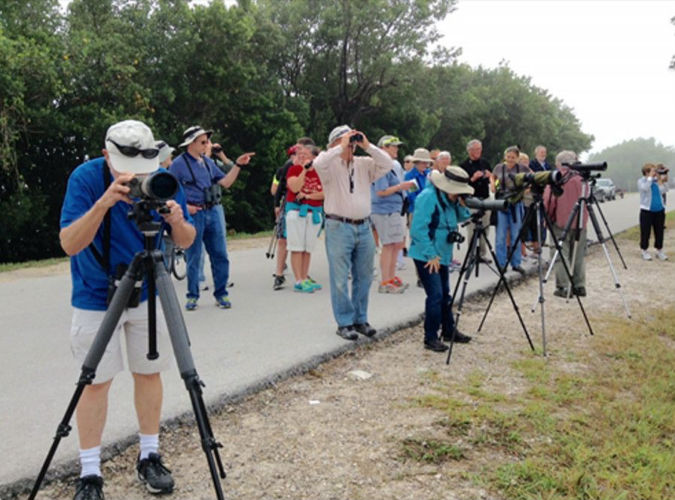
Experience Wellness in Nature @ “Ding” Darling National Wildlife Refuge

The fourth annual Wellness in Nature @ “Ding” event will take place from January 23 to 26 at the J.N. “Ding” Darling National Wildlife Refuge in Sanibel. Organized by the refuge and the “Ding” Darling Wildlife Society-Friends of the Refuge (DDWS), this four-day celebration of nature and well-being offers free activities designed to connect participants with the healing power of nature and highlight the importance of conservation.

Event Highlights

The event features a variety of engaging activities, from workshops and yoga sessions to live music and eco-creation stations. Some key highlights include:

  • Keynote Speaker: Aimee Copeland
    On January 23, Aimee Copeland, founder of the Aimee Copeland Foundation, will share her inspiring story of resilience following a life-changing accident. Her talks at 10 a.m. and 1 p.m. will focus on the significance of creating accessible recreation spaces.
  • Wellness in Nature Fest
    Taking place on January 25 from 10:30 a.m. to 2:30 p.m. at The Roost, the festival will feature:

    • Open-air live music
    • Eco-creation stations
    • Sunset yoga
    • Refreshments
    • An Interactive Conservation Pledge Wall
  • Walk for Wellness: Learn the Basics of Energy Medicine
    On January 26, wrap up the event with this invigorating session from 8:30 to 10 a.m., where you’ll explore the fundamentals of energy medicine while immersed in nature.
A Tradition of Healing in Nature

Supervisory Refuge Ranger Toni Westland shared the event’s goal:
“The purpose of the four-day event is to connect with new-to-‘Ding’ visitors and foster meaningful connections to nature. These experiences highlight how nature and humans help each other heal.”

Launched in 2021 with the unveiling of the self-guided Mindfulness Trail at the Bailey Tract, Wellness in Nature @ “Ding” has grown into a signature event designed to encourage outdoor activities that improve health and well-being.

Registration and Details
  • Registration: Free and open to all, but space is limited. Ten walk-in spots will be available for each activity.
  • How to Register: Visit the official event page for the full schedule and Eventbrite registration link.
IF YOU GO
  • What: Annual Wellness in Nature @ “Ding”
  • When: January 23-26
  • Where: J.N. “Ding” Darling National Wildlife Refuge, 1 Wildlife Drive, Sanibel
  • Cost: Free and open to the community

Don’t miss this opportunity to rejuvenate your body and mind while celebrating the beauty of the natural world! For more details, visit “Ding” Darling Wildlife Society.

Categories
Island Update

SCCF: Bald Eagle Nests Begin Hatching Across Sanibel and Captiva Islands

The Sanibel-Captiva Conservation Foundation (SCCF), in partnership with dedicated volunteers, is actively monitoring 10 bald eagle nests on Sanibel, Captiva, North Captiva, and nearby areas during the nesting season, which runs from October 1 to May 15.

First Hatchlings of the Season

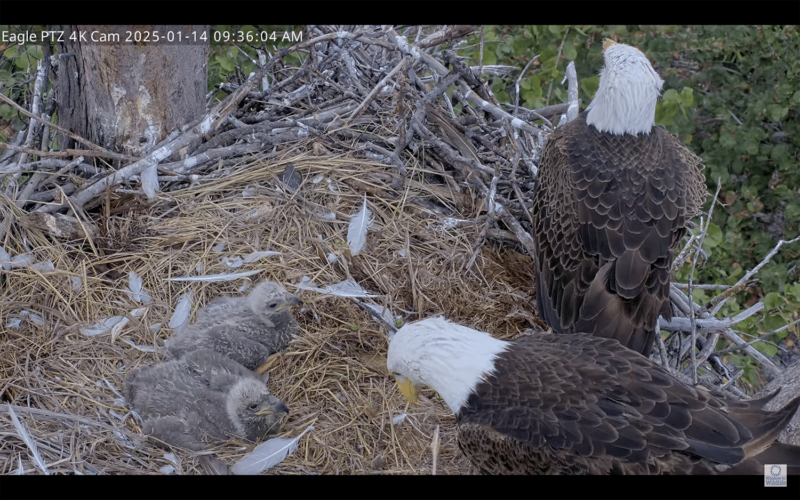
The SCCF reported that the first bald eagle nest of the season hatched in late December on Captiva. Since then, three additional nests have hatched eaglets on Sanibel. As of January 14, the remaining nests were either in the incubation phase or still under construction.

“Since Hurricane Ian in 2022, bald eagles on the islands have had great nesting success, fledging nine eaglets in 2023 and 13 in 2024,” said SCCF Shorebird Biologist Audrey Albrecht. “We’re hoping for another successful year.”

A Resilient Start After Hurricane Milton

The nesting season faced a challenging start with Hurricane Milton on October 9. A Window to Wildlife live stream captured adult male Clive from the Captiva nest weathering the storm in the nest. His mate, Connie, was briefly missing after the storm but later reunited with Clive. Their resilience has led to successful offspring this season.

Fascinating Facts About Bald Eagles

Bald eagles officially became America’s national bird on December 24, 2024, solidifying their role as a symbol of strength and freedom since their designation as the nation’s emblem in 1782.

  • Eaglet Care: After hatching, eaglets remain in the nest for 10-12 weeks. Both parents protect and feed their young, breaking food into small morsels and delivering it directly to the chicks.
  • Egg-Laying and Survival: Females typically lay up to three eggs a few days apart. The first eaglet to hatch often has an advantage, receiving more food and growing faster than its siblings.
  • Lifespan: Eaglets begin flying at around three months old and can live for 20-30 years in the wild.

To observe these magnificent birds, viewers can tune in to the Window to Wildlife live stream at YouTube.

Protecting Bald Eagles During Construction

While bald eagles are no longer classified as endangered, they remain protected by laws like the Bald and Golden Eagle Protection Act, the Migratory Bird Treaty Act, and Florida’s eagle regulations.

  • Distance Regulations: Construction or other disturbances should not occur within 660 feet of an active nest without a federal nest disturbance permit and proper monitoring.
  • Property Buffers: Homeowners and contractors can check if their property falls within the 660-foot buffer using Audubon’s EagleWatch Map at Audubon EagleWatch.
  • Permits: For information on obtaining work permits near bald eagle nests, visit FWC Eagle Permits.
Contributing to Bald Eagle Conservation

The SCCF’s monitoring efforts are conducted in collaboration with Audubon Florida’s EagleWatch program. To share eagle observations, photos, or ask questions, email eagles@sccf.org.

By respecting regulations and contributing to monitoring efforts, residents and visitors alike can help ensure the continued success of bald eagle populations on Sanibel, Captiva, and beyond.

Categories
Island Update

Protect Captiva Provides Update on Legal Efforts to Safeguard Island Development Standards

The Protect Captiva coalition, dedicated to preserving Captiva’s longstanding building height and density limitations, has provided an update on its legal actions.

Court Validates 2003 Settlement Agreement

On January 13, Protect Captiva announced that the Circuit Court recently heard arguments regarding the Captiva Civic Association’s (CCA) motion for summary judgment. On January 10, the CCA petitioned the court to uphold the 2003 settlement agreement between it and Lee County, asserting that the agreement remains valid and enforceable. The settlement limits South Seas Island Resort’s density to a maximum of 912 dwelling units — a cap that has been in place for over five decades.

The CCA urged the court to rule in its favor based on the same reasoning used to deny the county and resort’s motion on January 7. Following a rigorous hearing, the judge affirmed his earlier findings that the 2003 settlement agreement is indeed valid and enforceable. The court has directed both parties to submit proposed orders aligned with this ruling by Wednesday.

Background on the 2003 Settlement Agreement

The settlement agreement explicitly states:
“The total number of dwelling units on South Seas Resort is limited to 912. No building permits may be issued by the county for dwelling units within South Seas Resort that will cause that number to be exceeded at any time.”

This agreement arose from a 2003 lawsuit filed by the CCA, challenging Lee County and a developer’s efforts to increase the resort’s density beyond the Planned Unit Development (PUD) zoning limit of 912 units. The latest legal action by the CCA was prompted by a 2023 amendment to the county’s Land Development Code, which exempted South Seas from the island’s long-standing density cap of three units per acre.

A written decision from the court is anticipated this week.

“It remains to be seen whether Lee County and/or South Seas will choose to appeal,” Protect Captiva reported. “This decision marks a significant first step in our community’s efforts to safeguard Captiva from overdevelopment.”

Impact on Rezoning Application

While this ruling reinforces the 912-unit cap, it does not prevent South Seas from pursuing its rezoning application. The resort has requested to increase density to 1,268 units, with public hearings scheduled for February 14 and February 20-21.

Protect Captiva emphasized the importance of community participation in these hearings:
“We want county staff and the Hearing Examiner to recommend denial of the application, and for county commissioners to reject it. Captiva and Sanibel residents must testify, as they have before, to highlight the dangers of increasing building heights, density, and evacuation times on an island that has endured three devastating hurricanes in two years.”

State-Level Legal Case Nearing Decision

Protect Captiva also provided an update on its ongoing state case. The CCA and the city of Sanibel argue that amendments to the Land Development Code, which exempt South Seas from density and height restrictions, violate the Lee Plan. The Lee Plan mandates that development on Captiva align with its historic patterns.

After five days of hearings in August, attorneys for the CCA and Sanibel are optimistic that the Florida Division of Administrative Hearings will rule in their favor. A decision in this case is expected soon.

Community Efforts Remain Crucial

Protect Captiva concluded by urging continued community involvement:
“This Circuit Court decision reinforces that South Seas is bound by the 912-unit cap, and the CCA can take legal steps to ensure it is enforced. However, the fight is not over. Together, we must ensure our voices are heard at the upcoming public hearings and continue to advocate for the preservation of Captiva’s unique character and environment.”

For more updates and details on how to get involved, visit Protect Captiva’s website.