Categories
Island Update

Puschel Preserve’s Solar Shelter: A National First in Resilient, Clean Energy

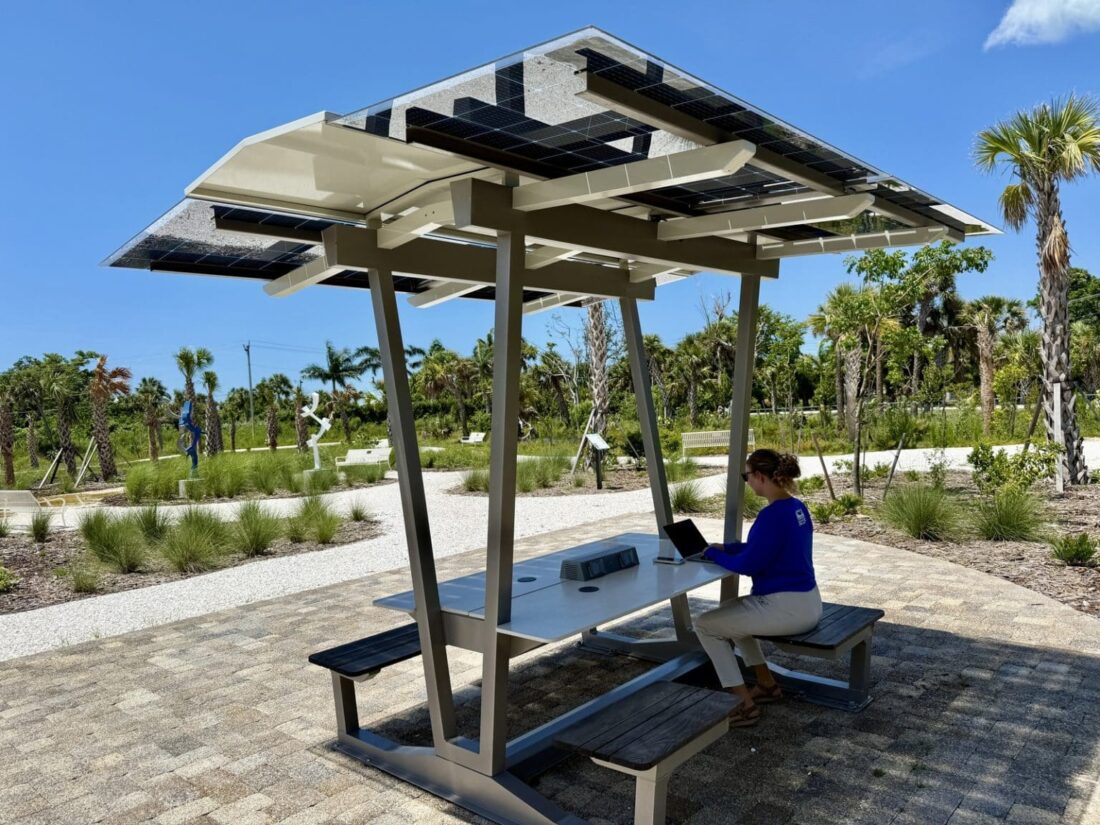
The Sanibel-Captiva Conservation Foundation (SCCF) has earned national recognition for a groundbreaking achievement at Puschel Preserve—the installation of the first Haven solar shelter at a nature preserve anywhere in the United States.

Designed to provide clean energy access and shaded comfort in a natural setting, the Haven solar shelter stands as both a community amenity and a model of environmental resilience.
Puschel Preserve

Proven Performance in Extreme Weather

Installed just over a year ago, the shelter faced a tough test almost immediately. Hurricanes Milton and Helene brought powerful winds and significant storm surges to Sanibel. Thanks to its Category 5-rated design and strategic positioning, the shelter stood strong.

Its elevated electrical system ensures that vital components remain safely above floodwaters, while robust construction materials make it well-suited for Sanibel’s extreme weather conditions. The University of Miami confirmed these design specifications before installation, according to Haven.

“Haven is the perfect addition, providing much-needed shade, a place to rest, and a sustainable power source to the many pedestrians who pass by the preserve,” said SCCF Facilities Director Jeff Siwicke. “Like our island ecosystems, the Haven has proven its resilience by withstanding multiple strong storms and hurricanes since its installation.”

Sustainability in Action

The solar shelter is more than a rest stop—it’s a visible example of clean energy in action. By integrating renewable power generation, battery backup, shade, and charging stations into a nature preserve, SCCF demonstrates that environmental protection and innovation can go hand in hand.

This initiative aligns with SCCF’s holistic approach to conservation, which combines people, science, and education to protect Southwest Florida’s natural ecosystems.

Visitor Amenities
  • Battery backup for continuous power

  • Wheelchair-accessible seating

  • Walking trail winding through gardens

  • Water fountain and bike repair station

  • Shaded rest areas for pedestrians and cyclists

Location

Puschel Preserve is located on the south side of Periwinkle Way between Purdy Drive and Martha’s Lane. Visitors can enjoy a peaceful trail through native landscaping while experiencing a forward-thinking example of sustainable infrastructure.


Categories
Island Update

Environmental Authors & Experts Headline 21st Annual “Ding” Darling Winter Lecture Series

Bald eagles, woodpeckers, lions, birds, and bees will take center stage this season as the 21st annual “Ding” Darling Winter Lecture Series returns to Sanibel from January 22 to April 16.

The free lecture series will feature renowned authors, photographers, conservationists, and wildlife experts sharing their knowledge and stories. Events take place twice daily at 10 a.m. and 1 p.m. on select Thursdays at the Visitor & Education Center of the J.N. “Ding” Darling National Wildlife Refuge.

Co-hosted by the “Ding” Darling Wildlife Society–Friends of the Refuge (DDWS) and the refuge, the series is made possible through generous sponsor support.

“We are honored to welcome such an impressive roll call of authors and experts,” said DDWS Executive Director Ann-Marie Wildman. “The series began in 2005 to help bring visitors back after Hurricane Charley, and it’s fitting that in its 21st year, we continue to celebrate resilience following Hurricane Ian.”

Lecture Series Highlights
  • Jan. 22 – Tony Lapi, Tales of an Island Innkeeper (sponsor: Bank of the Islands)

  • Jan. 29 – Kirsten Hines, Birds of Florida

  • Feb. 19 – Ron Magill, The Pride of a Lion: What the Animal Kingdom Can Teach Us About Survival, Fear and Family

  • March 5 – Jeri Magg, The Remarkable Women of Sanibel & Captiva

  • March 26 – Paul Bannick, Woodpecker: A Year in the Life of North American Woodpeckers

  • April 2 – Beekeepers Association of Southwest Florida, Live Hive & Taste: Observing Live Bees with Honey-Tasting

  • April 9 – Tina Morris, Return to the Sky: The Surprising Story of How One Woman and Seven Eaglets Helped Restore the Bald Eagle

  • April 16 – Charles Sobczak, The Living Gulf Coast: A Nature Guide to Southwest Florida

(Book signings follow most presentations.)

Special Experiences
  • Live Hive Viewing & Honey Tasting – Get up close with bees in a sealed hive and sample a variety of locally produced honeys.

  • Wildlife Photography & Storytelling – Hear from award-winning photographers who bring nature to life through their lens.

  • Local History & Conservation Tales – Discover the human and natural history of Sanibel and Captiva from the voices who know it best.

Attendance & Seating
  • Free admission – First come, first served.

  • Early arrivals may check in for a wristband and reserve up to two seats with personal items.

  • Reserved seats must be claimed 15 minutes before the lecture begins or they may be reassigned.

After each lecture, guests can browse and purchase books and other items in support of the refuge.

Event Location

J.N. “Ding” Darling National Wildlife Refuge
1 Wildlife Drive, Sanibel, FL

More Information

If you’d like, I can also SEO-optimize this blog post so it attracts people searching for “Sanibel events,” “wildlife lectures Florida,” or “things to do on Sanibel this winter,” which will help increase visibility.

Do you want me to prepare that optimized version next?

Categories
Real Estate News

Mortgage Rates Drop to Lowest Level in Four Months

Homebuyers may finally be getting a bit of breathing room—mortgage rates have dipped to their lowest levels since April, offering a glimmer of hope for those sidelined by high borrowing costs.

According to Freddie Mac, the average rate on a 30-year fixed mortgage fell to 6.63% this week, down from 6.72% last week and just above this year’s low of 6.62% set in April. A year ago, the rate averaged 6.47%.

15-year fixed mortgages, a popular choice for refinancing, also saw relief, sliding to 5.75% from 5.85% the week prior.

Why the Drop Matters

Elevated mortgage rates have been a major drag on the housing market since early 2022, when rates began climbing from the record lows seen during the pandemic. Home sales hit their lowest point in nearly 30 years in 2024, as higher borrowing costs kept both buyers and sellers on the sidelines.

This is the third consecutive week of declining rates—welcome news for a market that has hovered near this year’s high of 7.04% back in January.

What’s Driving the Change

Mortgage rates are closely tied to the 10-year U.S. Treasury yield, which lenders use as a benchmark. The yield was 4.23% as of Thursday midday, slightly up from Wednesday but still below last week’s levels.

The shift came after a weaker-than-expected U.S. jobs report raised concerns that new tariffs from the Trump administration may be dampening hiring plans. With slower job growth, many on Wall Street are now betting that the Federal Reserve will cut interest rates at its next meeting in September—something that could further ease mortgage rates.

However, Fed Chair Jerome Powell recently cautioned that inflation remains above the central bank’s 2% target, meaning rate cuts aren’t guaranteed.

The Bottom Line

Lower mortgage rates are good news for both buyers and sellers, but the trend is far from certain. As Lisa Sturtevant, chief economist at Bright MLS, notes:

“A weaker economy could lead to lower mortgage rates, but the risks of higher inflation could keep rates elevated.”

For now, those in the market might want to watch closely—this dip could be the opportunity to lock in a better rate before conditions shift again.

If you’d like, I can also create a shorter “market snapshot” version of this update with key numbers and buyer/seller takeaways for your real estate clients so it works as a quick-read social media post linking back to the blog. That would give you double use from this content.

Categories
Island Update

Coastal Living: The Secret to a Longer Life?

It turns out that living by the sea isn’t just good for your soul—it might actually add years to your life.

A recent study from The Ohio State University College of Public Health found a clear connection between life expectancy and living near the ocean or gulf. After analyzing population data from more than 66,000 U.S. census tracts, researchers discovered that people who live within 30 miles of coastal waters tend to live at least a year longer than the national average of 79 years.

Why the Coast Wins Over Inland Waters

While proximity to water in general is often linked to better health, this study found a surprising twist:

  • Coastal residents live longer on average.

  • Urban residents near inland lakes and rivers—even those larger than 4 square miles—had slightly shorter life expectancies, averaging about 78 years.

Dr. Jianyong “Jamie” Wu, lead researcher, points to several likely reasons:

  • Milder year-round temperatures and fewer extreme heat days

  • Cleaner air and better overall environmental quality

  • More opportunities for outdoor recreation

  • Better transportation and infrastructure

  • Higher average household incomes

  • Lower susceptibility to drought

On the other hand, inland urban areas near large bodies of water often face higher pollution levels, increased poverty rates, fewer safe spaces for exercise, and greater flood risk—all factors that can negatively impact health.

The Science of “Blue-Space Living”

The term “blue space” refers to areas near water, and earlier research has already linked it to:

  • Higher levels of physical activity

  • Lower obesity rates

  • Better heart health

But this is the first nationwide, systematic study to compare different types of blue spaces—coastal versus inland—and how they impact longevity.

“We thought any type of blue space would offer health benefits,” Wu explains, “but we were surprised to see such a strong difference. In coastal areas, people are living longer.”

Postdoctoral researcher Yanni Cao adds that the findings might even help explain broader U.S. life expectancy trends, which have recently seen slower recovery compared to other wealthy nations. She notes that environmental and social health determinants—from neighborhood design to climate conditions—play a significant role in these differences.

Florida: The Coastal Capital of the Mainland U.S.

If you’re looking to embrace the benefits of coastal living, Florida might be the ultimate destination. With the longest coastline in the continental United States, it offers more opportunities than anywhere else on the mainland to enjoy the health-boosting perks of ocean proximity.

Whether it’s the salt air, the slower pace, or the year-round access to the beach, science now confirms what coastal residents have always known—life by the water just feels better… and might last longer too.

If you’d like, I can also create a shorter, punchier “lifestyle version” of this post that works perfectly for SEO and social media while linking back to the full blog. That way, you get both deep-dive readers and quick scrollers covered.

Categories
Island Update

Protect Captiva Shares Legal Update in Fight to Preserve Island’s Building Limits

The group behind the Protect Captiva initiative has released a new update on its ongoing legal efforts to uphold Captiva Island’s long-established building height and density restrictions.

On July 23, the Captiva Civic Association (CCA) filed a motion for sanctions against South Seas Island Resort and its legal counsel, arguing that the resort’s recently filed lawsuit is “frivolous” and without legal basis.

“South Seas claims the CCA misrepresented the 912-unit cap outlined in the settlement agreement—specifically, that hotel units should not be counted,” the coalition explained. “However, the Circuit Court has already ruled that the 912-unit cap does include hotel units.”

This 912-unit cap stems from key legal precedents including the 1973 zoning resolution, the 2002 Administrative Interpretation, and the 2003 settlement agreement—all of which clearly counted hotel units within the overall unit limit. The judge in the original administrative hearing confirmed this interpretation, as did testimony from Lee County planning officials and even South Seas’ own chief planner.

Given these facts, the CCA has asked the court to order South Seas and its attorney to cover legal fees associated with the lawsuit. It also requested a court-ordered bond from South Seas if they intend to continue pursuing the case—arguing that such tactics are often used to financially burden communities that oppose overdevelopment.

“We believe lawsuits like this are filed to make it harder and more expensive for the public to push back against excessive development,” Protect Captiva stated. “Our legal motions aim to safeguard our mission and the generous support from our donors.”

Upcoming Hearing on South Seas Rezoning Application – August 6

Meanwhile, an important hearing is scheduled for August 6 at 9:30 a.m. at the Old Lee County Courthouse in Fort Myers. The Lee County Board of County Commissioners will review South Seas’ rezoning application, which proposes major changes to approximately 120 acres of resort land.

South Seas is seeking to rezone the property from Residential Multiple-Family, Marine Commercial, and Two-Family Conservation to Mixed Use Planned Development. The proposal would permit:

  • Up to 193 multiple-family dwelling units

  • Up to 435 hotel units

  • Accessory uses, common infrastructure, and resort amenities

The board will consider the Hearing Examiner’s recommendation, issued on July 9 by Chief Hearing Examiner Donna Marie Collins, who recommended approval with specific conditions after multiple public hearings earlier this year.

To review the full hearing agenda, the Examiner’s report, and supporting materials, visit the Lee County website and search for LEE COUNTY HEARING.

Location:
Old Lee County Courthouse
2120 Main Street, Fort Myers, FL

Categories
Island Update

Love Sanibel Back Continues: August 3–9 Brings More Island Events, Treats, and Local Discounts

The Love Sanibel Back campaign rolls into another exciting week from August 3 to 9, continuing its mission to connect the island community and support local businesses. Each week brings fresh events, exclusive offers, and new reasons to come together and show love for Sanibel.

This ongoing initiative was launched by Saint Michael and All Angels Episcopal Church in partnership with the Charitable Foundation of the Islands, the SanCap Chamber, and the City of Sanibel. Together, these organizations are helping residents and visitors alike celebrate the island spirit and uplift the businesses that make Sanibel so special.

Highlights of the Week (August 3–9):

August 6 – Open House at CROW
Clinic for the Rehabilitation of Wildlife – 3883 Sanibel-Captiva Road
Enjoy a behind-the-scenes look at Sanibel’s renowned wildlife rehab center, along with treats and special discounts.

August 8 – Coffee, Conversation & Croissants
Sanibel Captiva Trust Company – 2450 Periwinkle Way
10:00 AM to 11:00 AM
Connect with neighbors over coffee and croissants in a relaxed setting. Reservations are appreciated but not required.
RSVP: FSteger@sancaptrustco.com | ☎️ 239-472-8300

August 9 – Community Gathering at Rosalita’s Cantina
975 Rabbit Road
6:00 PM
Stop by for a casual evening with the community. Campaign buttons will be available, and the first 20 customers will receive a free reusable tote bag.

Week-Long Discounts & Freebies From:

– Bailey-Matthews National Shell Museum & Aquarium
– J.N. “Ding” Darling National Wildlife Refuge
– Sanibel Carts

These partners are offering special perks and promotions to help you explore the best of Sanibel while supporting the local businesses that power the island economy.

Supporting From Afar?
You can still be part of the movement!
saintmichaels-sanibel.org/lsb-online

Full campaign details and event calendar:
saintmichaels-sanibel.org/love-sanibel-back

Let’s keep showing up for Sanibel—week after week.

Categories
SWFL Update

RSW Expands with New Carrier and Three Exciting U.S. Destinations

Travelers in Southwest Florida have some great news when it comes to more flight options at Southwest Florida International Airport (RSW) in Fort Myers.

Allegiant Air is expanding its presence at RSW with the announcement of seven new nonstop routes connecting 12 cities nationwide. Among these new routes, three will directly connect to and from RSW, making it easier for travelers to reach popular vacation spots such as Naples, Fort Myers Beach, Sanibel, and Cape Coral.

New Routes from Allegiant Air

Starting this fall, Allegiant will launch the following new nonstop flights:

  • Allentown, Pennsylvania (via Lehigh Valley International Airport) – Beginning November 13, with one-way fares starting at $69.

  • Appleton, Wisconsin (via Appleton International Airport) – Beginning November 21, with one-way fares starting at $69.

  • Des Moines, Iowa (via Des Moines International Airport) – Beginning November 21, with one-way fares starting at $69.

To celebrate the new routes, Allegiant is offering one-way fares as low as $49. Travelers can check the Allegiant Air website for more details and any applicable restrictions.

Why This Matters

This expansion is part of Allegiant’s ongoing effort to connect underserved communities with affordable, direct travel options. According to Drew Wells, Allegiant’s chief commercial officer, the addition of Fort Myers to their network means travelers can enjoy convenient, nonstop access to beautiful beach destinations, reducing time spent at the airport and maximizing time spent on vacation.

With these new routes, Allegiant continues to offer affordable travel options for those looking to visit the sunny destinations of Southwest Florida.

Categories
SWFL Update

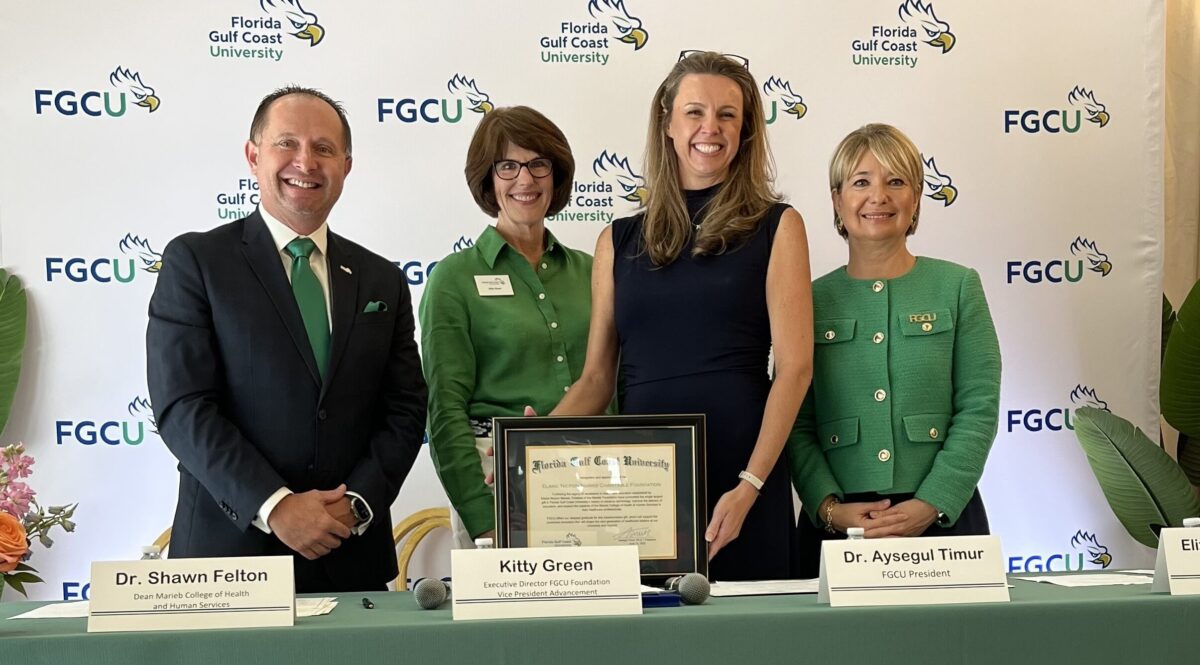
FGCU Receives Historic $22 Million Donation from Marieb Foundation

Florida Gulf Coast University (FGCU) has announced a transformative $22 million gift from the Elaine Nicpon Marieb Charitable Foundation, marking the largest donation in the university’s history. The gift will enhance the Marieb College of Health & Human Services, supporting the development of state-of-the-art instructional technology to elevate health care education in Southwest Florida.

This historic pledge, set to span nine years, builds on over $17 million in previous contributions from the Marieb Foundation between 2011 and 2022, totaling $39 million in support. In honor of Elaine Nicpon Marieb’s philanthropy, the Marieb College and Marieb Hall are named after her.

The latest donation will also provide naming rights for Academic Building 10, a planned expansion of the Marieb College, with construction set to begin in fall 2026.

Elaine Nicpon Marieb, a renowned scholar and philanthropist, passed away in 2018. She made significant contributions to education and health care training, pledging much of her fortune to institutions like FGCU, Holyoke Community College, Mount Holyoke College, and the University of Massachusetts Amherst.

This generous gift aims to improve health care education by integrating innovative technology, enhancing both student learning and faculty research. According to FGCU President Aysegul Timur, the gift represents a pivotal moment for the university and will have a long-lasting impact on the health care workforce.

Dr. Larry Antonucci, CEO of Lee Health, emphasized the importance of this gift for the local health care system, noting that training students with cutting-edge technology will better prepare them for future careers and align them with real-world systems.

Shawn Felton, Dean of the Marieb College, expressed that the continued support from the Marieb Foundation has allowed FGCU to become a regional leader in health care education. This latest donation will further expand the college’s technological advancements, ensuring that students have the tools needed to thrive in an evolving health care environment.

Marieb College currently enrolls 2,700 students across 15 degree programs, including nursing, social work, rehabilitation sciences, health science, and counseling. The college boasts impressive outcomes, such as 100% licensure pass rates in six health care programs and nearly 100% employment within six months of graduation.

This gift secures the future of health care education at FGCU and reinforces the Marieb Foundation’s enduring legacy of supporting innovation and excellence in education and health care.

Click here for the full article

Categories
Island Update

First Florida Chicken Turtle Spotted on Sanibel Since Devastating Storms

On July 4, the Sanibel-Captiva Conservation Foundation (SCCF) made an exciting and rare discovery during a routine biological survey—a Florida chicken turtle, the first seen on Sanibel Island since Hurricanes Helene and Milton struck in late 2024. The powerful storm surges from these hurricanes disrupted fragile freshwater habitats, leaving conservationists uncertain about the survival of this elusive species.

A Rare and Seasonal Island Visitor

The Florida chicken turtle (Deirochelys reticularia chrysea) is a freshwater species that lives in temporary wetlands and becomes dormant during dry seasons, a state known as aestivation. These turtles depend on shallow, seasonal wetlands that fill during the rainy season and are particularly rare on barrier islands like Sanibel, where freshwater sources are limited and easily impacted by saltwater intrusion.

“Chicken turtles are especially hard to find on islands like Sanibel,” explained SCCF wildlife biologist Mike Mills. “They rely on freshwater and primarily feed on crayfish, tadpoles, and fish. Their dependence on seasonal wetlands makes them extremely vulnerable to storm surges that increase salinity and disrupt their feeding grounds.”

Tracking for Conservation

Back in 2020, SCCF launched a radio telemetry study to better understand the movements and habitat needs of Florida chicken turtles on Sanibel. This research helps conservationists map out the turtles’ home range and behaviors—critical data for long-term protection efforts.

The newly discovered turtle has now been outfitted with a radio tag, making it a key participant in this ongoing study.

“Understanding the spatial ecology of a species—where it goes, how it lives—is crucial to developing effective conservation strategies,” said Mills. “This is especially true for species like the Florida chicken turtle, which are poorly understood and increasingly threatened.”

Storm Impact and Signs of Resilience

Following Hurricane Ian in 2022, salinity levels in freshwater wetlands spiked to over 20 PSU (practical salinity units)—alarmingly close to ocean water salinity (around 32 PSU). Sadly, several chicken turtles were found deceased near these wetlands, victims of saltwater exposure. The same outcome followed Hurricanes Helene and Milton, with all previously tracked turtles either found dead or lost due to transmitter corrosion from saltwater.

Yet the recent discovery of a surviving individual offers a glimmer of hope.

“This sighting suggests that at least some members of the population may have the resilience to survive extreme weather events,” Mills said. “But make no mistake—between habitat loss, road mortality, and illegal pet trade, the Florida chicken turtle remains highly vulnerable.”

A Critical Opportunity for Research and Protection

SCCF hopes that continued monitoring of this newly tagged turtle will help fill vital knowledge gaps—not just for Sanibel’s population, but for Florida’s broader conservation efforts.

“As we face more frequent and intense storms, the data we gather now will help shape how we protect these at-risk species in the future,” Mills concluded.

Categories
Island Update

Sanibel Historical Museum to Reprint Iconic Book in Honor of City’s 50th Anniversary

At its regular meeting on July 30, the Sanibel City Council approved a request from the Sanibel Historical Museum & Village to reprint 500 hardcover copies of Sanibel’s Story: Voices and Images from Calusa to Incorporation, authored by Betty Anholt. This reprint will commemorate Sanibel’s 50th anniversary, a milestone the city celebrated on November 5 of last year.

Originally commissioned by the city in the 1990s, Sanibel’s Story was first published in 1998, with a second printing in 2000. The city retains the copyright for the book, which details the island’s rich history from its Calusa roots to its incorporation as a city.

This third edition of the book will be fully funded by the Museum & Village, with no financial burden placed on the city. Pamela Miner, the Museum & Village’s Executive Director, informed the City Council in a letter that all proceeds from the reprint will support the museum’s ongoing mission to preserve, share, and celebrate Sanibel’s history.

The Museum & Village plans to handle the reprinting, marketing, and related expenses, ensuring that this timeless piece of Sanibel’s history continues to be enjoyed for generations to come.