Voters have made their voices heard on the barrier islands, officially electing incumbent Bernie Dupre and challenger Michael Mullins as the newly seated commissioners for the Captiva Erosion Prevention District 2026 General Election. Held last week, the contested races highlighted a highly engaged electorate eager to shape the future of Captiva’s coastline. Because the local beach infrastructure is a critical asset for both the natural environment and local property values, the direction of this specialized board remains of paramount importance to the entire community.
Seat One: Incumbent Bernie Dupre Secures Victory
In the race for the Captiva Erosion Prevention District’s (CEPD) Seat One, incumbent Bernie Dupre successfully defended his position, securing 52.83% of the vote (84 votes) over challenger Margarethe Thye-Miville, who received 47.17% (75 votes).
Expressing deep gratitude to the residents for allowing him to continue his service, Dupre acknowledged the critical, yet sometimes turbulent, path the CEPD has traversed.
“First, I would like to express my gratitude to the residents for allowing me to continue to serve. CEPD’s core mission of beach erosion and prevention is a valuable asset to this community,” Dupre said. “Unfortunately, its historical governance and administration has at times been tortured and dysfunctional. I am proud that over the past year, under the leadership of the outgoing chairman, it has been reorganized to function effectively.”
Dupre praised the recent streamlining of the district’s operations, highlighting the qualified external oversight now provided by GMS (Governmental Management Services), alongside the strong financial and operations management of Lisa Batchelor. In his view, this modernized operational structure is a massive win for the district, allowing the commissioners to step back from day-to-day administrative minutiae and focus their attention on high-level financial oversight and long-term strategic direction.
Importantly, Dupre remains fiercely committed to keeping the board’s focus strictly on its primary, legally mandated purpose. He explicitly warned against “mission creep,” stating that concerns like iguana control, village drainage issues, or bayside regulations—while certainly real and important to residents—are not within the mandate of the CEPD. He urged the community to hold the newly elected board to the highest standards of proper governance in fulfilling its primary, historical mission of beach erosion and prevention.
Seat Three: Michael Mullins Wins Contested Race
In Seat Three, challenger Michael Mullins claimed a decisive victory, securing 63.52% of the vote (101 votes) to defeat incumbent Bob Walter, who received 36.48% (58 votes).
Mullins expressed that he was very pleased with the election outcome and deeply appreciates the faith Captiva residents have placed in him.
“Unlike past years, when CEPD commissioners often ran unopposed or were appointed, this contested election highlights our residents’ strong engagement and concern for the future of our community,” Mullins shared.
During his term, Mullins plans to advocate for expanding the district’s proactive initiatives, with a specific focus on the concept of “bayside resiliency.”
He argued that, under the CEPD’s enabling legislation, the obligation to prevent erosion and increase resilience applies to all tidal areas of Captiva. In Mullins’ view, the district must proactively address the severe threats that rising seas and intense storms pose to the entire island, including its bayside and inland estuarine areas, rather than focusing exclusively on the Gulf-facing beaches. Additionally, Mullins intends to focus on restoring crucial federal funding to support these critical efforts, which will be essential for keeping local taxes manageable while undertaking massive engineering projects.
CEPD’s Role in Protecting the Captiva Lifestyle
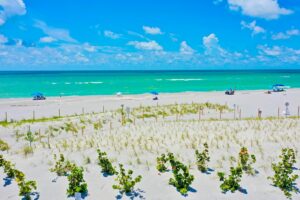
The results of this election will undoubtedly shape the island’s approach to environmental resilience, which directly impacts everything from Captiva Island real estate trends to daily tourism operations. Beach nourishment, dune restoration, and coastal engineering are not just ecological necessities; they are the foundation of Captiva’s economic viability and unique natural beauty.
As the newly formed board begins its work, balancing Dupre’s focus on streamlined, mandate-driven governance with Mullins’ push for bayside resiliency will be a major focal point for local observers.
The CEPD operates in close coordination with regional and state environmental bodies to secure necessary permits and execute massive sand replenishment efforts. To learn more about current coastal projects, volunteer opportunities, and to view upcoming board meeting schedules, residents can visit the official Captiva Erosion Prevention District website. To keep track of broader environmental and civic debates happening across the region, be sure to explore our ongoing coverage of Captiva Island community events. Let us know what you hope to see from the newly elected commissioners as they tackle the island’s coastal challenges!