It is that special time of the year when the islands’ terrestrial turtles are actively laying eggs, and tiny new hatchlings can be seen navigating our upland landscapes. While the severe storm surges spanning 2022 through 2024 heavily impacted and reduced our native terrestrial turtle populations, vital species recruitment and habitat restoration efforts are officially underway across the islands.
At the LeAneSuarezGroup, we know that sharing our paradise with unique wildlife is what makes barrier island living so incredibly rewarding. Among our most treasured neighbors is the gopher tortoise (Gopherus polyphemus), a state-designated threatened species in Florida and the most prominent land turtle on our islands.
Why they matter: Gopher tortoises are considered a critical “keystone species”. Their instinct to dig deep underground burrows provides essential shelter, safety from predators, and refuge from extreme weather for more than 300 other wildlife species across their native geographic range.
Post-Storm Recovery and the Power of Burrows
The recent historic storm cycles left a heavy mark on these land-dwelling creatures. According to Chris Lechowicz, the SCCF’s Wildlife & Habitat Management Director, annual burrow surveys revealed that the number of active gopher tortoise burrows across five primary SCCF preserves plummeted by at least 39% following Hurricane Ian.
To counter this sharp decline, a dedicated network of community volunteers has stepped up this year to drive intense habitat restoration. Ensuring these tortoises have proper, open-canopy grasslands to thrive is a top priority because the local ecosystem depends on them. Even though fewer than the maximum 300 symbiotic species utilize these burrows on Sanibel specifically, they remain an absolutely irreplaceable pillar of a healthy, functioning island environment.
                     GOPHER TORTOISE BURROW DYNAMICS

  [ PRE-STORM IMPACT ] ──► Burrow counts dropped by ≥39% on SCCF preserves post-Ian.
  [ COMMUNITY ACTION ] ──► Volunteers actively restoring native grasslands.
  [ SPECIES REFUGE ]   ──► Burrows shelter hundreds of vertebrate & invertebrate species.
Mistaken Identity: Tortoise Hatchlings vs. Sea Turtles
Because gopher tortoises highly prefer open-canopy grasslands, the sandy, vegetation-rich tops of our beach dunes serve as prime real estate for them to dig their burrows. This proximity to the shoreline leads to a frequent—and highly dangerous—case of mistaken identity during hatching season.
Beachgoers regularly spot tiny gopher tortoise hatchlings wandering through low dune brush in search of leafy food or navigating open patches of sand. Mistaking them for newly hatched baby sea turtles, well-meaning but misinformed individuals frequently pick them up and toss them directly into the saltwater Gulf of Mexico. Because gopher tortoises are strictly land-dwelling animals that cannot swim, throwing them into the ocean is fatal. Unbelievably, even large adult tortoises are occasionally misidentified and carried into the surf by visitors unfamiliar with our local wildlife.
To keep our young wildlife safe, use this quick reference guide to accurately tell them apart:
How to Spot the Difference:
-
Hatchling Sea Turtles: Distinctly dark in color—ranging from deep browns and greys to solid black. Instead of clawed feet, they possess long, elongated swimming flippers designed purely for the open ocean.
-
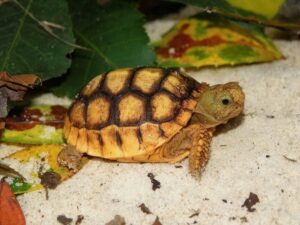
Hatchling Gopher Tortoises: Feature a round, elevated, dome-shaped shell. Their coloration is brightly distinctive, showing off vibrant shades of yellow and orange mixed with minimal brown highlights. Crucially, they possess short, stubby feet that resemble miniature elephant legs.
                        HATCHLING VISUAL IDENTIFIER

  [ SEA TURTLE ]       ──► Dark brown/black/grey shell  │  Long ocean flippers
  [ GOPHER TORTOISE ]  ──► Bright yellow/orange shell   │  Short, stubby elephant feet
Growing Up on the Island Dunes
While young gopher tortoises are fully capable of digging their own miniature burrows from birth, they save energy by routinely taking up residence inside the abandoned, empty burrows left behind by larger, older tortoises. As these juveniles successfully mature toward adulthood, the bright, sunny yellow and orange tones of their upper shell (carapace) will gradually fade and lock into a solid, camouflaged dark brown shade.
Let’s do our part to keep our beaches safe and beautiful for all of our native species. Keep your eyes on the dune line, leave land tortoises on the dry sand, and enjoy watching the next generation of keystones grow!