A profound economic stabilization is reshaping the hospitality landscape across coastal communities. Nearly four years after sustaining severe impacts from Hurricane Ian, data from the winter travel season confirms that a sweeping Southwest Florida tourism rebound is firmly underway.
Driven by a powerful combination of returning multi-generational vacationers and newly engineered, climate-resilient lodging options, regional destinations are experiencing a major surge in visitor metrics. From the pristine shelling shores of Sanibel Island to the high-end boutique strips of Naples, the entire corridor is transforming its operational narrative from long-term reconstruction to competitive market growth.
Rebuilding Momentum in Southwest Florida Tourism Rebound
The most telling indicator of the Southwest Florida tourism rebound is the massive climb in monthly tourist tax collections, often called the bed tax, across individual county jurisdictions. These localized revenue gains supply direct funding for beach nourishment projects, major spring training sports complexes, and regional marketing playbooks.
Lee County Surge
In Lee County, preliminary resort tax receipts posted consistent double-digit expansions throughout the peak winter travel window:
-
November & December Logistics: Revenue spiked by 13.6% in November and jumped an impressive 17.7% in December.
-
Early Winter Performance: Gains continued into the new year, posting a 15.7% lift in January and a 21.9% increase in February, with total collections climbing from $6.12 million to $7.47 million year-over-year.
-
Macro Volume: Total visitor arrivals from January through March surpassed approximately 1 million travelers, marking a 28% increase compared to the previous year. Concurrently, overall visitor spending reached an astounding $1.39 billion, backed by a 16% volume increase in registered room nights.
“Much improved over the last few years,” stated Tamara Pigott, the long-standing Executive Director of the Lee County Visitor & Convention Bureau (VCB), who recently announced her upcoming summer retirement after 33 years of county service. “Recovery, especially coastal recovery, is ongoing. But it does feel like we’ve turned the corner. We’re starting to put that conversation behind us and focus on how we can deliver the best experience to visitors.”
Divergent Regional Trends
While Lee County observed a smooth upward trajectory, neighbor profiles revealed varied timelines. Charlotte County’s bed tax took a brief 12% hit in November following secondary storm system disturbances from hurricanes Milton and Helene, though it quickly rallied to post a 7% rebound by February.
To the south, Collier County experienced an exceptional peak-season acceleration. Resort revenue soared from $4.88 million in January to $7.09 million in February—an enormous 45.2% single-month jump that highlights the robust demand anchoring the luxury sector in Naples.
Luxury Accommodations and Premium Price Drivers
A significant catalyst behind the accelerating values of the Southwest Florida tourism rebound is the entry of high-end international hospitality brands into the local real estate inventory. The current winter season marked the first full operational run for the highly anticipated Naples Beach Club, a premier Four Seasons Resort.
The entry of this single asset has created a prominent rising tide for local luxury metrics. Average daily room rates (ADR) at the complex consistently clear the $1,200 mark, with top-tier inventory like the resort’s five-bedroom presidential suite commanding up to $40,000 per evening during peak windows. This premium product presence helped push Collier County’s macro ADR from $485 to $499 year-over-year.
Crucially, project management notes that the economic impact is deeply tied to domestic area integration rather than isolated tourist spending. Highly sought-after on-site concepts like HB’s, The Merchant Room, and the beachside Sunset Bar have successfully drawn both destination guests and full-time residents, establishing a lively community social hub.
Evaluating Post-Ian Lodging Capacity and Infrastructure Limits
Despite the exceptional trajectory of the Southwest Florida tourism rebound, overall lodging inventory remains a primary constraint, particularly along the barrier islands where structural building codes are tightly managed.
-
The Baseline Deficit: Prior to the historic storm surge of September 2022, the sister islands of Sanibel and Captiva maintained a combined pool of 2,452 rentable rooms.
-
Current Operational State: As of the close of the spring season, active inventory has climbed back to 1,817 certified rooms. While representing an incredible engineering feat to reach 74% capacity from a complete baseline of zero on the day after landfall, it highlights a remaining gap in available market units.
-
The Extended Timeline: “The last 25% is the hardest,” warned John Lai, President and CEO of the Sanibel-Captiva Chamber of Commerce. “It’s buildings that haven’t come out of the ground yet. While we have sprinted to 74%, the rest is going to be a marathon. Maybe 90% is the new 100%.”
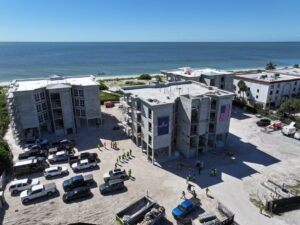
A key milestone supporting this island recovery is the formal reopening of the historic Shalimar Beach Resort along West Gulf Drive. Completely destroyed by the 2022 storm surge, the property has been entirely rebuilt from the ground up as a modern, resilient 33-room boutique destination. For returning visitors who have spent decades traveling to the area, the resort offers an important return to the intimate, low-density character of “Old Florida,” while meeting state-of-the-art building codes.
Spring Training Baseball and Coastal Excursions
The underlying traffic driving the Southwest Florida tourism rebound continues to rely on the timeless combination of pristine beaches, dependable sunshine, and Major League Baseball spring training. Long-time winter visitors frequently balance inland stays with day trips to the barrier islands to navigate around capacity restrictions while maximizing their vacation experiences.
The region’s two major Grapefruit League stadiums serve as powerful economic engines throughout February and March:
-
JetBlue Park (Fort Myers): The spring home of the Boston Red Sox operates as a near-exact replica of historic Fenway Park, complete with its own towering Green Monster outfield wall. The facility consistently draws capacity crowds, recently hosting a St. Patrick’s Day sellout crowd of 9,601 spectators.
-
Hammond Stadium (Fort Myers): Positioned just six miles away, the spring training grounds for the Minnesota Twins similarly observed strong turnouts, recently hosting 7,363 fans for a single matchup against the Pittsburgh Pirates.
With temperature differentials between midwestern origin cities and Southwest Florida occasionally tracking at a 70-degree spread, the baseline appeal of the market remains completely intact. As regional visitor bureaus transition to new leadership frameworks this summer, the structural baseline established by this record-setting winter season ensures the vacation sector is well-positioned for its next long-term cycle of market expansion along the Gulf.