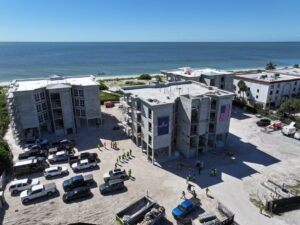
The Florida SouthWestern State College enrollment has officially crossed the 17,000-student threshold, marking its highest headcount since 2011 and securing the third-highest enrollment level in the institution’s history. This significant milestone underscores the accelerating demand for workforce-aligned degrees, professional certifications, and affordable higher education across the communities bordering Florida’s Gulf coast.
As population migration into Lee, Collier, and Charlotte counties maintains a strong upward trajectory, Florida SouthWestern State College (FSW) continues to expand its footprint to keep pace with regional employment needs. By providing flexible degree pathways and localized training facilities, the institution serves as a foundational engine for talent development, economic mobility, and professional credentialing throughout the Southwest Florida corridor.
Academic Diversity Driving Florida SouthWestern State College Enrollment
A key catalyst behind the resurgence in Florida SouthWestern State College enrollment is the institution’s diverse, market-responsive curriculum. Rather than relying solely on traditional two-year transfer programs, FSW offers a comprehensive suite of career-ready educational tracks designed to meet the immediate demands of regional employers:
-
Associate Degree Programs: Offering 29 distinct associate degrees that span business administration, digital media, engineering technology, and criminal justice, providing seamless transfer pathways to four-year state universities.
-
Four-Year Baccalaureate Degrees: Providing six targeted bachelor’s degree programs focused on high-demand local sectors, including nursing (BSN), elementary education, and public safety administration.
-
Industry & Workforce Certifications: Delivering rapid-entry college credit certificates (CCC) and specialized continuing education modules that allow professionals to upskill or re-enter the workforce quickly.
-
Allied Health and Nursing: Anchoring regional hospital clinical staffing by graduating hundreds of nurses, cardiovascular technicians, and emergency medical responders annually.
Multi-Campus Accessibility Across Southwest Florida
To serve a diverse commuter student body spanning hundreds of square miles, FSW operates an interconnected network of physical campuses and modern digital learning environments. Students can complete coursework across full-service campus locations in Fort Myers (Lee County), Naples (Collier County), and Punta Gorda (Charlotte County).
In addition to its three primary regional campuses, the college maintains a dedicated educational center in LaBelle (Hendry County), ensuring that residents in agricultural and interior communities have direct access to collegiate resources without enduring long daily commutes. Complementing its physical classrooms, the institution’s virtual division, FSW Online, provides accredited, asynchronous degree completion for working adults, parents, and remote learners balancing education with professional responsibilities.
Delivering a $563 Million Regional Economic Impact
The tangible benefits of expanding Florida SouthWestern State College enrollment extend far beyond student diplomas. According to comprehensive economic impact assessments, the college generates an estimated $563.1 million in total annual economic output across Southwest Florida, directly and indirectly supporting 6,759 regional jobs.
The largest share of this economic footprint stems from the institution’s active alumni base. FSW graduates living and working throughout the region contribute an estimated $430.1 million in annual economic impact through higher workforce productivity, business ownership, and household spending. By preparing students to enter vital local industries—ranging from commercial construction management and logistics to education and clinical healthcare—the college acts as an indispensable economic anchor.
This workforce momentum complements broader commercial investments and infrastructure expansions taking place across regional business centers. To examine how local job creation and demographic shifts are shaping the broader economy, review our analysis of the Florida Chamber 2026 economic report.