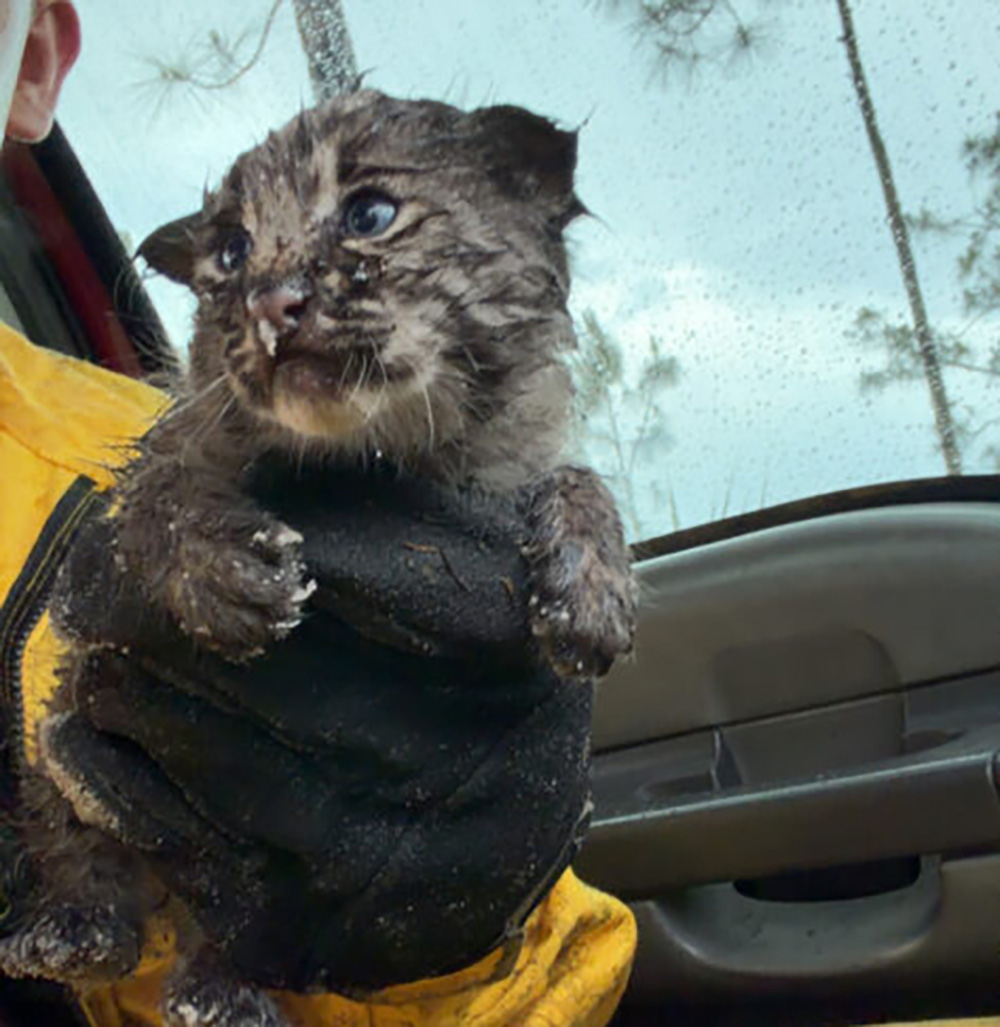
A tiny symbol of wildlife resilience is currently recovering on Sanibel Island after a harrowing escape from a local wildfire. The Clinic for the Rehabilitation of Wildlife (CROW) announced that it is providing intensive care to a native bobcat kitten that was rescued from the path of a four-acre brush fire in Charlotte County.
At the LeAneSuarezGroup, we are continually inspired by the dedicated first responders and conservationists who protect the unique wildlife defining our sanctuary islands and surrounding regional ecosystems. This incredible rescue is a testament to the quick-thinking heroism found right here in Southwest Florida.
In a nutshell: A volunteer firefighter discovered a 4-to-6-week-old bobcat kitten crawling out of ashes during a brush fire. Named “Ash,” the kitten is now stable and under close respiratory monitoring by the veterinary team at CROW on Sanibel.
The Ash-Covered Discovery on Orange Blossom Boulevard
The brush fire, which ignited on May 24 along Orange Blossom Boulevard in Charlotte County, was believed to have been sparked by a natural lightning strike. As the fire grew to encompass four acres, crews from the Bayshore Fire Protection and Rescue Service District moved in to suppress the flames.
Julian Roman-Kulwicki, a volunteer firefighter who had been with the district for only about a month, was working the line when he heard a faint meowing and spotted a tiny animal crawling out of a fresh pile of hot ash.
-
Immediate First Aid: Recognizing the animal was cold to the touch and in deep distress, Roman-Kulwicki wrapped the kitten in his heavy firefighting jacket to warm her up.
-
A Fitting Name: At the station, the team washed away the soot and realized they were looking at a wild feline. Roman-Kulwicki affectionately named the resilient little survivor “Ash.”
-
The Hand-Off: Bayshore Captain William LeMieux assisted with the initial stabilization before coordinate transport, expressing his relief that the kitten was bound for specialized care. “I know she is in good hands there and hopefully will get back to the wild,” LeMieux noted.
Veterinary Update: Monitoring for Smoke Inhalation at CROW
Upon arrival at CROW’s state-of-the-art diagnostic clinic on Sanibel, the veterinary medical team immediately placed the young female kitten—estimated to be between 4 and 6 weeks old—under comprehensive examination.
                  CROW MEDICAL EVALUATION BREAKDOWN: "ASH"

  [ THE GOOD NEWS ]   ───► No external skin burns, skeletal injuries, or active wounds.
  [ THE CRITICAL ]    ───► Placed under strict observation for latent respiratory issues.
  [ CURRENT STATUS ]  ───► Stable, resting comfortably, and eating well.
While initial physical assessments revealed no dynamic external burns or acute bone injuries, wildlife veterinarians remain highly cautious regarding internal trauma.
“Right now, she is stable and resting comfortably in our care, which is encouraging. One of our biggest concerns at this stage is the possibility of smoke inhalation. Even when animals appear stable initially, respiratory complications can develop over time, so we are monitoring her very closely.” — Dr. Jessica Comolli, CROW Research & Medical Director
How to Report Injured or Orphaned Wildlife
As summer temperatures rise and natural seasonal weather cycles increase lightning activity across local preserves, human encounters with displaced wildlife are common.
If you encounter an animal that appears injured, orphaned, or dazed by environmental conditions in Southwest Florida, do not attempt to care for it yourself. You can reach out directly to CROW’s specialized first responder team by calling 239-472-3644, ext. 222. To learn more about their ongoing rehabilitation projects or to make a donation toward Ash’s long-term medical care and eventual re-release, visit the Official CROW Clinic Website.
Featured Image
Here is the custom-designed featured image concept tailored perfectly for this heartwarming wildlife survival story, set to an optimal 16:9 aspect ratio:
IMAGE_GENERATION(A professional, high-end wildlife conservation blog featured image, 16:9 aspect ratio. The scene is split down the center with a soft artistic blur effect. On the left side, a close-up, photorealistic shot of a tiny, healthy 6-week-old wild bobcat kitten with bright blue-grey eyes, distinct spotted fur, and tufted ears resting inside a soft, warm green fleece blanket. On the right side, a dramatic background of a smoky pine flatwoods forest edge with low-burning amber embers and thin white smoke rising from a charred ground, symbolizing a controlled brush fire recovery. The layout is clean and spacious, with no text overlays, evoking themes of rescue, medical hope, and nature’s resilience. Upscale National Geographic editorial photography style.)