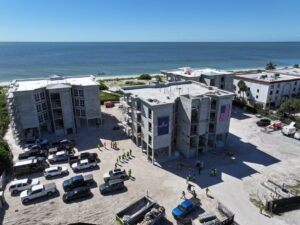
The highly contested South Seas Resort Captiva rezoning approval has survived a major legal challenge, marking a significant victory for the property’s developers and Lee County officials as they chart the future of the beloved barrier island along the Gulf coast. In a decisive ruling signed on October 21, 2026, Judge James Shenko of Florida’s 20th Circuit Court officially denied a petition that sought to overturn the controversial zoning variances previously granted by the Lee County Board of County Commissioners.
This judicial decision ensures that the approved redevelopment plans for the sprawling northern Captiva resort will remain intact and proceed under the county’s modernized land-use guidelines. For months, the zoning changes at South Seas Island Resort (SSIR) have been at the absolute center of a fierce local debate regarding building density, structural heights, and environmental preservation following the devastating impacts of Hurricane Ian in September 2022. The court’s ruling not only validates the administrative process utilized by county commissioners but also sets a profound legal precedent for how massive coastal properties will balance private property rights with regional economic demands in a post-storm era.
The Legal Battle Over the South Seas Resort Captiva Rezoning Approval
The legal challenge fundamentally questioned whether the Lee County government overstepped its bounds and violated established community planning protocols when it granted the South Seas Resort Captiva rezoning approval in August 2025. Spearheaded by the Captiva Civic Association (CCA), opponents of the rezoning effort argued that the changes ignored long-standing density restrictions designed to protect Captiva’s delicate ecosystem and unique, low-rise island charm.
Historically, the resort was capped at specific density thresholds, offering a 107-room hotel alongside employee housing and quaint, low-impact amenities. However, after Hurricane Ian leveled much of the original hotel infrastructure, the resort ownership group sought updated development approvals that would allow them to dramatically expand their commercial footprint. The new master plan permitted the construction of two distinct, modern hotels totaling 435 rooms, alongside an additional 193 dwelling units.
For the Captiva Civic Association and numerous island residents, this proposed expansion which essentially quadruples the historic hotel room count and replaces traditional employee housing with private condominiums represented a stark departure from the “historic low-density residential development pattern” mandated by the island’s longstanding comprehensive plan. The ensuing legal friction culminated in multiple high-stakes appeals and the pivotal court review under Judge Shenko.
Judge Shenko’s Ruling and the Protection of Due Process
In his October 21 decision, Judge Shenko methodically dismantled the procedural arguments brought forward by the petitioners. The court found that the Lee County Board of County Commissioners based its ultimate decision on “competent substantial evidence,” applied the correct legal standards, and provided all public participants with the required due process during the highly attended zoning hearings. By meeting these strict legal benchmarks, the county insulated its decision from being overturned on procedural grounds.
In the written decision, Judge Shenko emphasized the county’s broad legislative authority to adapt to modern realities. He noted that the Board was “free to rezone SSIR’s property in a manner that honored Lee Plan policies benefitting the entirety of Lee County given the rapidly changing environment that required climate resiliency and economic benefits to the entire citizenry while simultaneously respecting SSIR’s (South Seas’) property rights.”
This specific phrasing highlights the delicate balancing act local governments must perform: respecting the overarching economic needs of the entire county while acknowledging the localized concerns of civic groups like the CCA.
Balancing Climate Resiliency with Regional Economic Growth
The court’s explicit mention of “climate resiliency” strikes at the heart of the current barrier island rebuilding philosophy. Since the catastrophic storm surge of Hurricane Ian, coastal developers and county planners have argued that historic building codes and legacy zoning restrictions prevent property owners from implementing the elevated foundations and reinforced infrastructure necessary to survive future extreme weather events.
By upholding the zoning amendments, the court acknowledged that modernizing a massive commercial anchor like South Seas provides a net economic benefit to the region. Rebuilding the facility to modern structural codes ensures that the local tourism economy which fuels critical tax revenues for all of Lee County remains stable and competitive for decades to come.
This judicial endorsement of resilient, elevated coastal redevelopment mirrors other major commercial projects actively taking shape across the barrier islands. To see how other historic properties are navigating municipal codes to build back stronger, review our recent coverage of the Waterside Inn redevelopment Sanibel. Meanwhile, local residents continue to review comprehensive municipal drainage solutions, as detailed in the recent Captiva stormwater management system plan, to protect the Village area from future flooding.
As South Seas Resort prepares to advance its massive redevelopment under the protection of this court order, the legal landscape for coastal development in Southwest Florida has undeniably shifted.